


June 27, 2025
Source: Web Hispania
In September 1552, a violent storm struck the Gulf coast of New Spain, leaving a deep mark on the fledgling settlements of Veracruz and the port island of San Juan de Ulúa. More than a historical curiosity, this event offers insight into how early colonial societies interpreted, responded to, and recorded natural disasters. The 1552 hurricane was the first such event officially documented in the Spanish Americas using the term “huracán,” and its record provides a rare window into the social, political, and religious frameworks of 16th-century disaster perception.
In the early decades of Spanish colonization, the search for a suitable port on the Gulf coast led to multiple relocations of the city of Veracruz. From the provisional camp at Chalchicueyecan in 1519 to the final 16th-century site by the Huitzilapan River (now La Antigua), each settlement grappled with environmental challenges. Meanwhile, San Juan de Ulúa, a small offshore island discovered by Juan de Grijalva, grew in importance due to its natural anchorage and proximity to transatlantic shipping lanes. By 1550, Veracruz and Ulúa formed an essential logistical duo for colonial trade and governance.
Winds of Destruction: The Hurricane Arrives
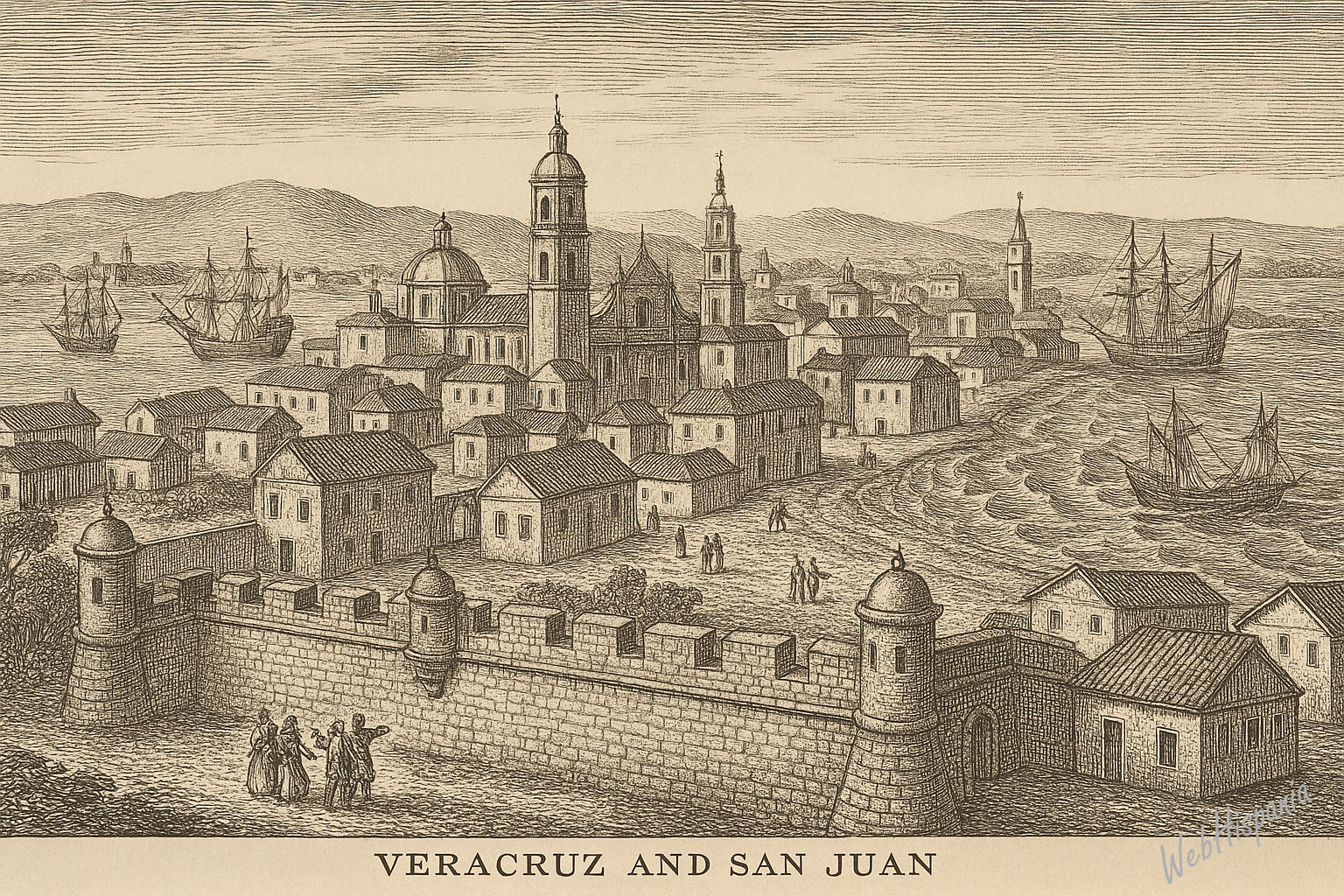
Veracruz and San Juan de Ulúa as they may have appeared before the hurricane of 1552—an essential gateway of New Spain. (AI-generated image)
On September 2, 1552, a powerful hurricane made landfall. The storm raged for nearly three days. Testimonies describe a sudden shift from complete calm to roaring winds, torrential rain, and catastrophic flooding. In Veracruz, the rising Huitzilapan River destroyed homes and warehouses. In San Juan de Ulúa, waves engulfed the island, sweeping away buildings and lives.
The damage was not just physical. The event triggered intense psychological trauma among the population. Eyewitness accounts described terrifying sounds from the wind, interpreted by some as the voices of demons or divine punishment. Others saw the event as a test of faith, noting that the Eucharist was preserved even as much of the city was destroyed.
A Documented Disaster
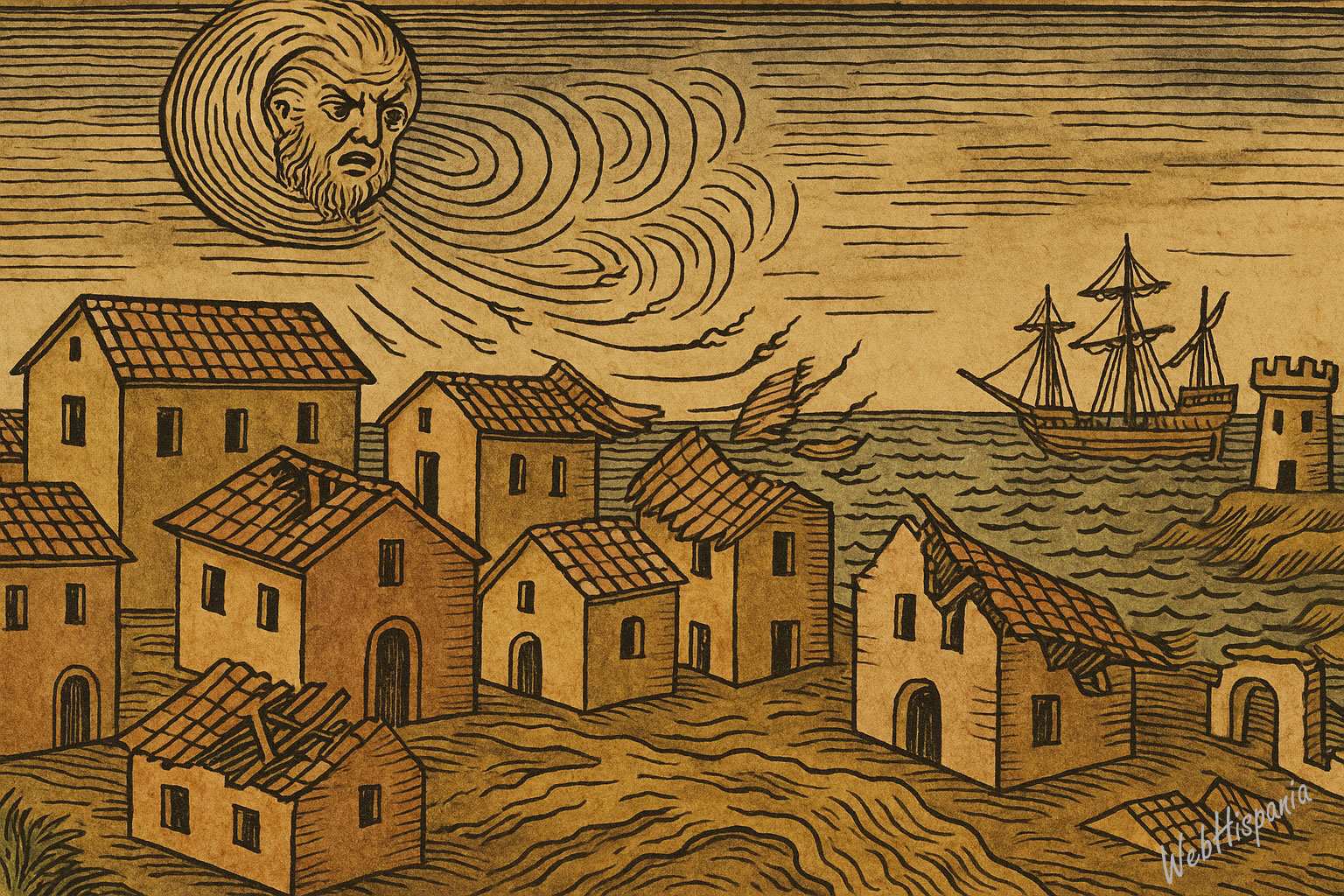
A 16th-century artistic interpretation of a hurricane ravaging a colonial town—blending environmental destruction with symbolic representation. (AI-generated image)
Shortly after the event, the alcalde mayor of Veracruz, García Escalante y Alvarado, compiled a detailed dossier of 19 folios, now preserved in the Archivo General de Indias in Seville. This “Information on the Storm in the Port and City of Veracruz” includes 11 witness testimonies, offering a vivid portrait of the storm’s effects and the responses of both civilians and authorities.
The document’s goal was pragmatic: to request aid and reconstruction funds from the viceroyalty and the Spanish Crown. However, it inadvertently provides a unique anthropological and historical record. The hurricane’s description, the social reactions, and the calls for preventive infrastructure (such as stone walls in Ulúa) illustrate how colonial societies sought to negotiate risk within their environmental and political constraints.
The Construction of Disaster
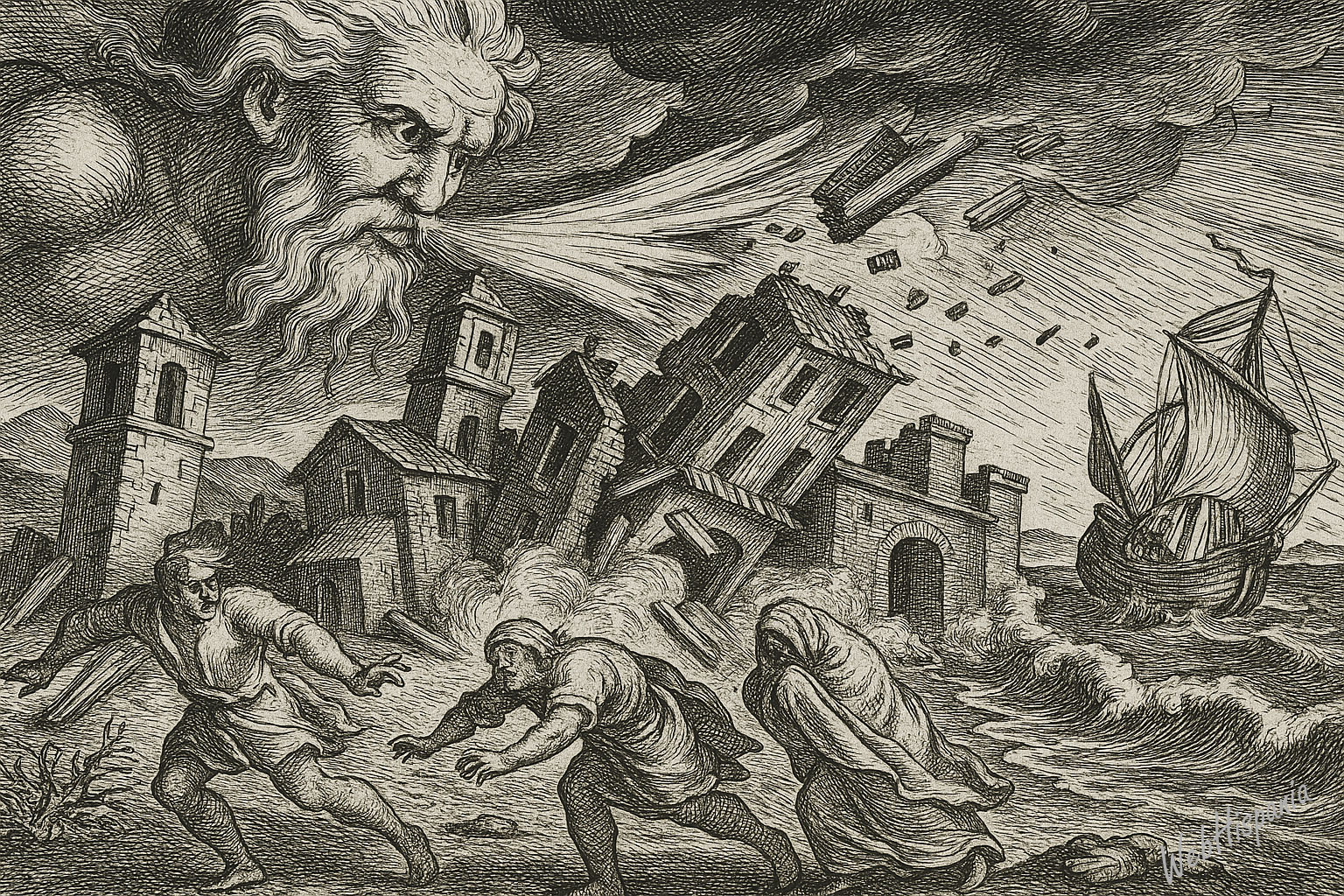
A dramatic 16th-century-style engraving captures the hurricane’s fury over Veracruz: destruction, chaos, and the mythic struggle of man against nature. (AI-generated image)
Modern disaster studies reject the idea that natural events are inherently “disasters.” Instead, disasters occur where natural hazards intersect with social vulnerability. The 1552 hurricane exemplifies this. Veracruz and San Juan de Ulúa were exposed not merely because of the storm, but due to their locations, construction materials, and the economic imperative to maintain coastal trade routes.
Testimonies show how residents recognized these vulnerabilities even in the 16th century. Observers noted that the damage was worsened by the city’s layout, the poor foundations, and the accumulation of goods near the riverbanks. Calls for building stronger infrastructure and relocating key functions (like customs and warehouses) reflected an early understanding of urban planning under risk.
Social Cohesion and Trauma
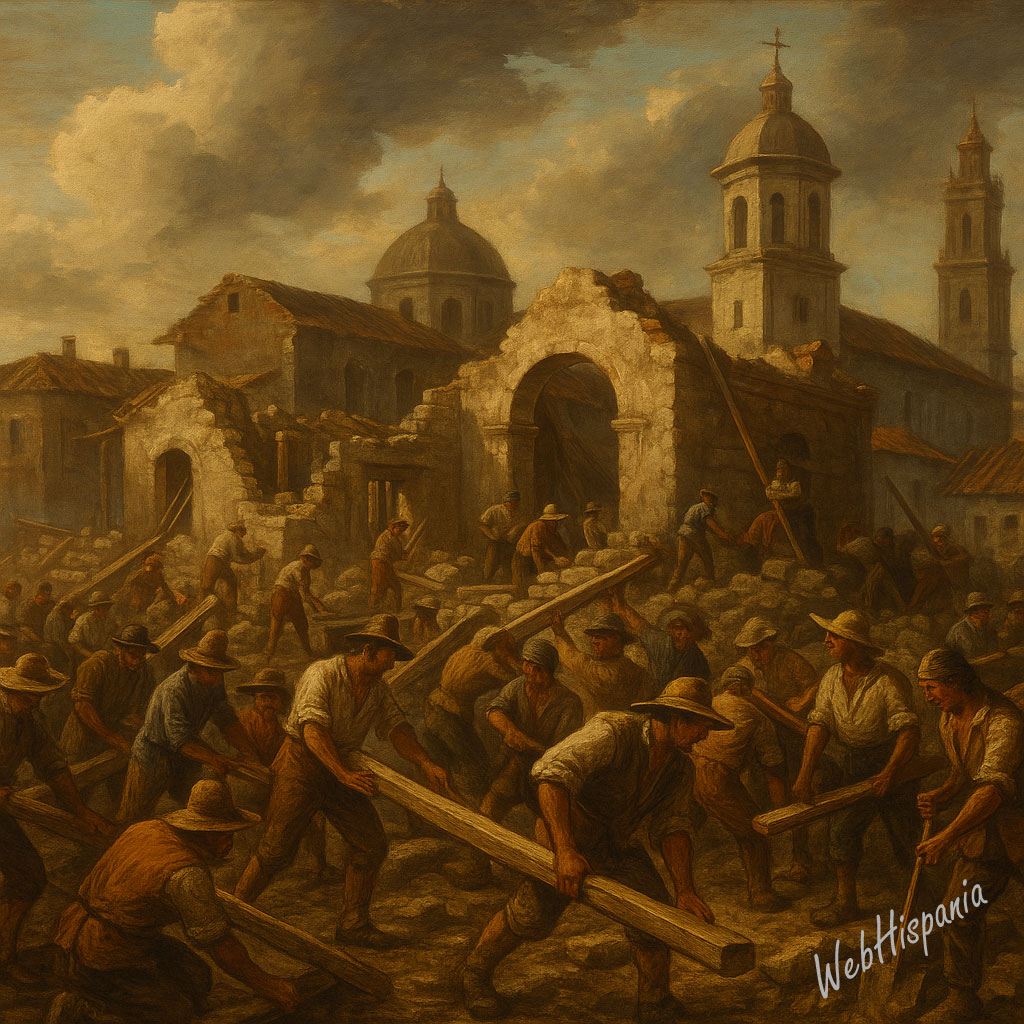
Amid the ruins of colonial Veracruz, the community came together to rebuild what the hurricane destroyed—stone by stone. (AI-generated image)
Despite the destruction, the testimonies also reveal resilience. Local officials took action during the storm—warning residents, rescuing the trapped, and organizing emergency relief. One witness praised Alcalde Martín Díaz for tirelessly aiding the sick and poor.
The hurricane had collective as well as individual psychological effects. Some saw divine punishment; others found meaning in community solidarity. These reactions echo modern findings on post-disaster trauma and recovery. The sense of shared fate and the desire to rebuild highlight the adaptive capacities of early colonial communities.
Long-Term Consequences
The hurricane’s effects rippled through time. By 1609, Veracruz was relocated once more—this time to the sandy coast directly opposite San Juan de Ulúa, closer to maritime traffic but still exposed. Meanwhile, Ulúa was fortified through Crown-funded projects: coral stone walls, towers, artillery positions, and official residences.
Though the 1552 hurricane did not immediately end settlement in La Antigua, it reshaped the trajectory of urban and port development in the region. It demonstrated the costs of underestimating environmental threats, and the political value of documenting disaster.
Why It Matters Today
The 1552 hurricane is more than a footnote. It invites reflection on how societies face crisis. The Spanish colonists of Veracruz did not passively suffer nature’s wrath; they interpreted, adapted, and sought remedies.
Their experience reminds us that vulnerability is socially constructed, that resilience requires both infrastructure and memory, and that documentation—whether by quill in the 16th century or digital media today—plays a vital role in how societies learn from disaster.
This early case of environmental catastrophe in colonial Latin America offers valuable lessons for our own climate-challenged era. In both the past and present, the storm is never just the wind—it is also what we build, how we respond, and what we choose to remember.
Sources
- Archivo General de Indias (Sevilla), Real Patronato, vol. 81, registro 25, f. 954–965.
- López Romero, Paul César. El huracán que pasó por la ciudad de Veracruz y el puerto de San Juan de Ulúa, Nueva España 1552. La construcción de un “desastre” en la época virreinal. Teoría y Praxis, No. 29, Editorial Universidad Don Bosco, junio-diciembre de 2016, pp. 75–88. ISSN 1994-733X.
- Delgado, Ana María (coord.). Cien viajeros en Veracruz. Crónicas y relatos. Gobierno del Estado de Veracruz, 1992.
- García Acosta, Virginia & Lozoya Padilla, Raymundo. Los huracanes en la historia de México. Memoria y catálogo. CIESAS, 2007.
Share this article
On this day
No Events
History of Spain