


Source:
Source:Hispanic Council
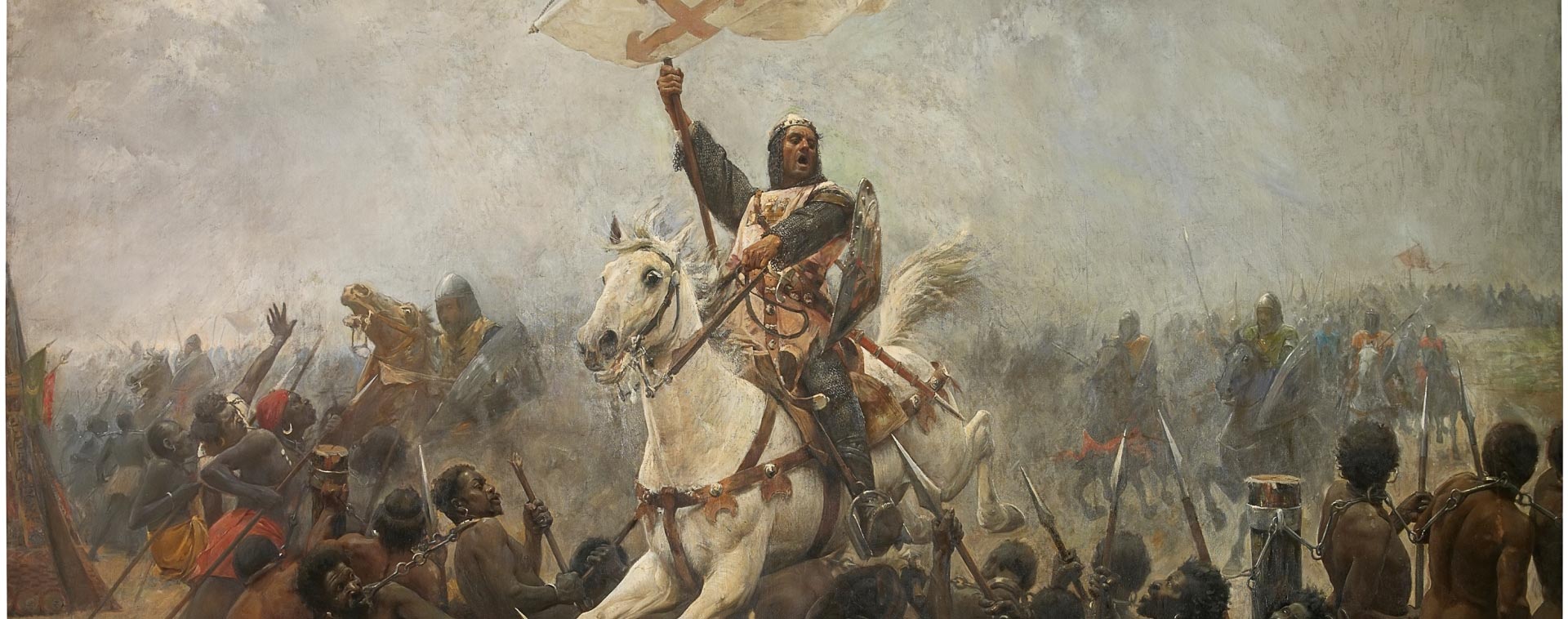
During the mandate of Alphonso X the Wise of the Crown of Castile, a body of laws known as the “Seven Laws” was drawn up. They tried to give uniformity to the kingdom in legal matters and dealt with different aspects. Among these seven, the first dealt with canon law, the second with political law, the third with procedural law, the fourth, fifth and sixth with private law, and the seventh with criminal law.
It is important to note that these laws were also instituted in the American territories of the Crown of Castile, making the necessary adaptations, and after their independence, the Spanish rules that had governed the territories did not disappear. Mexico was a clear example of how the “Siete Partidas” remained an important legal source for the country after its independence. In this way, we can speak of a body of laws that laid the foundations of jurisprudence both in Spain and in Latin America until the 19th century.
Later, after the war between Mexico and the United States, the new borders between the two countries were established and Mexico lost much of its territory, which today are the states of California, Utah, Nevada, Texas, New Mexico, and part of Arizona. Colorado, Wyoming, and Oklahoma. It is not surprising, therefore, that in those territories of what is now the United States, the presence of Spanish regulations still had a profound impact. There are many cases in these states where different Supreme Courts resort to provisions of the different parties to elaborate their sentences.
The Seven Laws today
In 1989 alone, more than three hundred judgments citing the Seven Parties appear in the Supreme Courts of Louisiana, Texas, Arizona, New Mexico, and California. Something that shows the undeniable historical relationship of both countries and that is remembered today in the capital of the country. After the reform of the House of Representatives in 1949, 23 marble reliefs were added above the doors of the upper gallery, representing important figures in the history of the United States. Among them appears the figure of Alfonso X the Wise, because of the writing during his reign of the aforementioned “Siete Partidas”. A historical milestone that reaffirms the link between both countries.
One Comment
Leave A Comment
You must be logged in to post a comment.
Share this article
On this day
- 1690 The excellent Baroque painter Juan de Valdés Leal, nemesis of Murillo and famous for his "Vanitas" in the Hospital de la Caridad, dies in Sevilla.
- 1940 At dawn, Lluís Company y Jover, President of the Generalitat de Catalunya, is shot by a picket of soldiers at Montjuic Castle for the crime of military rebellion.
History of Spain

[…] U.S. and the influence of the “Seven Laws”Something that shows the undeniable historical link between both countries and that is remembered today in the capital of the country, where Alphonso X gained his place in US history. […]