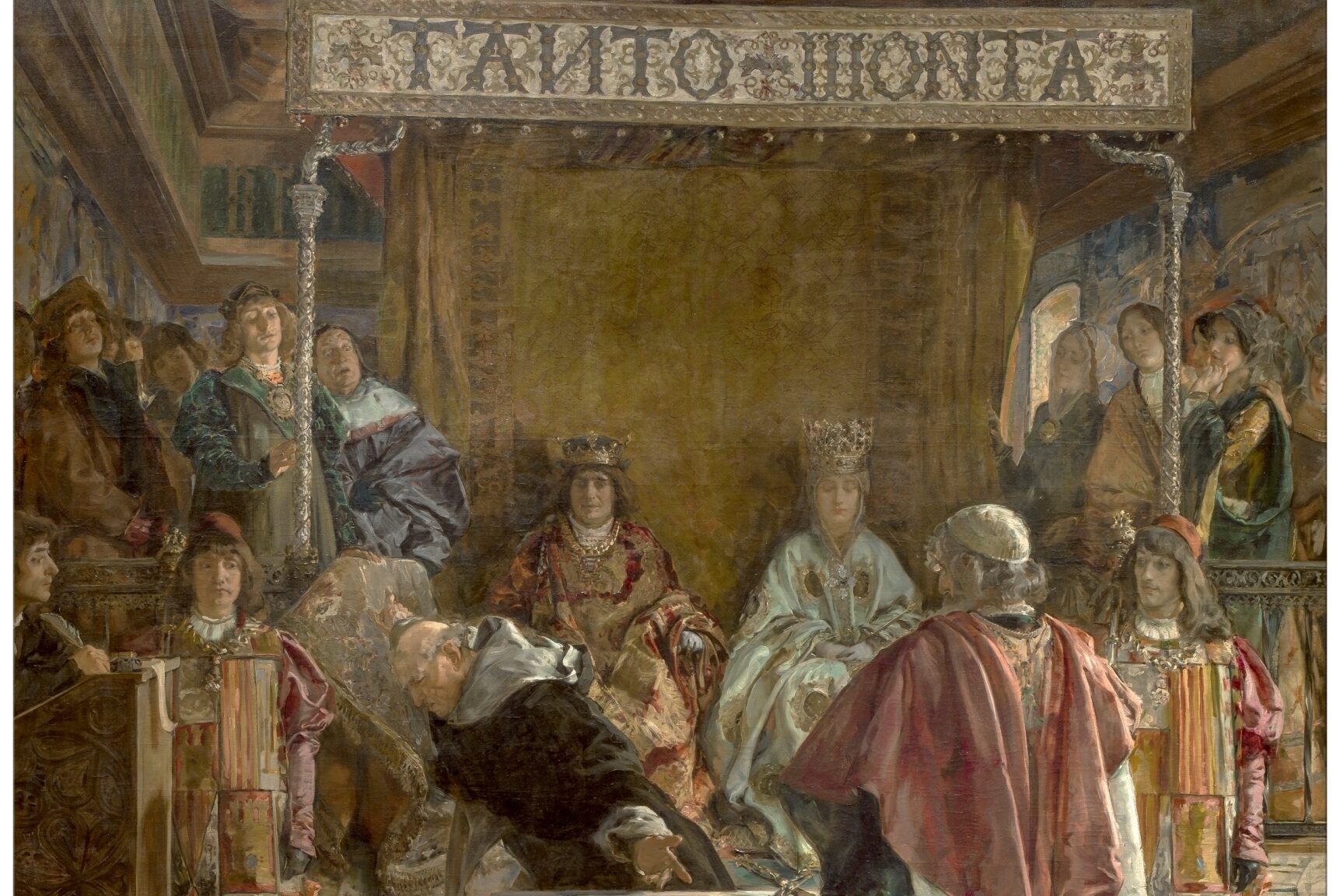


Source:El Debate
France proposed to Spain that it should participate in a coalition in defence of Catholicism after the persecution of missionaries in Vietnam. Spain accepted not only for religious reasons, but also because the aim was to maintain the territorial status quo and, to this end, a policy of prestige was considered essential.
Indeed, Spain has its own particular imprint in Vietnam and, in fact, Spanish tombs have been there since the 19th century. But what is the reason for this presence and what were the motivations that led these men to such distant lands?
The explanation lies in a military intervention by Spanish troops who, allied with France, landed in Cochinchina (southern Vietnam) on 1 September 1858. What legitimised this intervention? Revenge for the massacre of missionaries and Catholic converts that had been unleashed there as a result of the 1848 edict by which Emperor Tu-Duc had decreed the extermination of Christianity in his domain. Theoretically, therefore, it was conceived as a punitive action against the savage attacks against Christians, and was even considered a “missionary crusade”.
Alliance in defence of Catholicism
To put this in context, it should be noted that, as early as the 17th century, Jesuit missionaries, fleeing the fierce persecution to which they were subjected in Japan, landed on the shores of the kingdom of Tonkin (northern Vietnam). By the following 18th century, they had spread, along with the Dominicans, to a total of 5,000 missionaries. They succeeded in converting 300,000 natives to Catholicism. This caused the local authorities to distrust the growing power and influence of these missions.
In this context, Napoleon III, ruler of France since 1849, had given himself the title of protector of Christian missionaries in the Far East. Faced with such circumstances, he decided to launch a punitive action against the emperor of Annam (Vietnam). But was this his only motivation? Not at all, even if Napoleon III, in the eyes of Western chancelleries, dressed it up as an altruistic mission, the reality was that, in the midst of the Imperialist era, France still had no possessions in that Asian region, while its imperial competitor, the United Kingdom, possessed the rich colony of India and was endeavouring to acquire Chinese ports. In contrast, the Empire of Annam (Vietnam) looked like a promising and appetizing region that could pass into French hands.
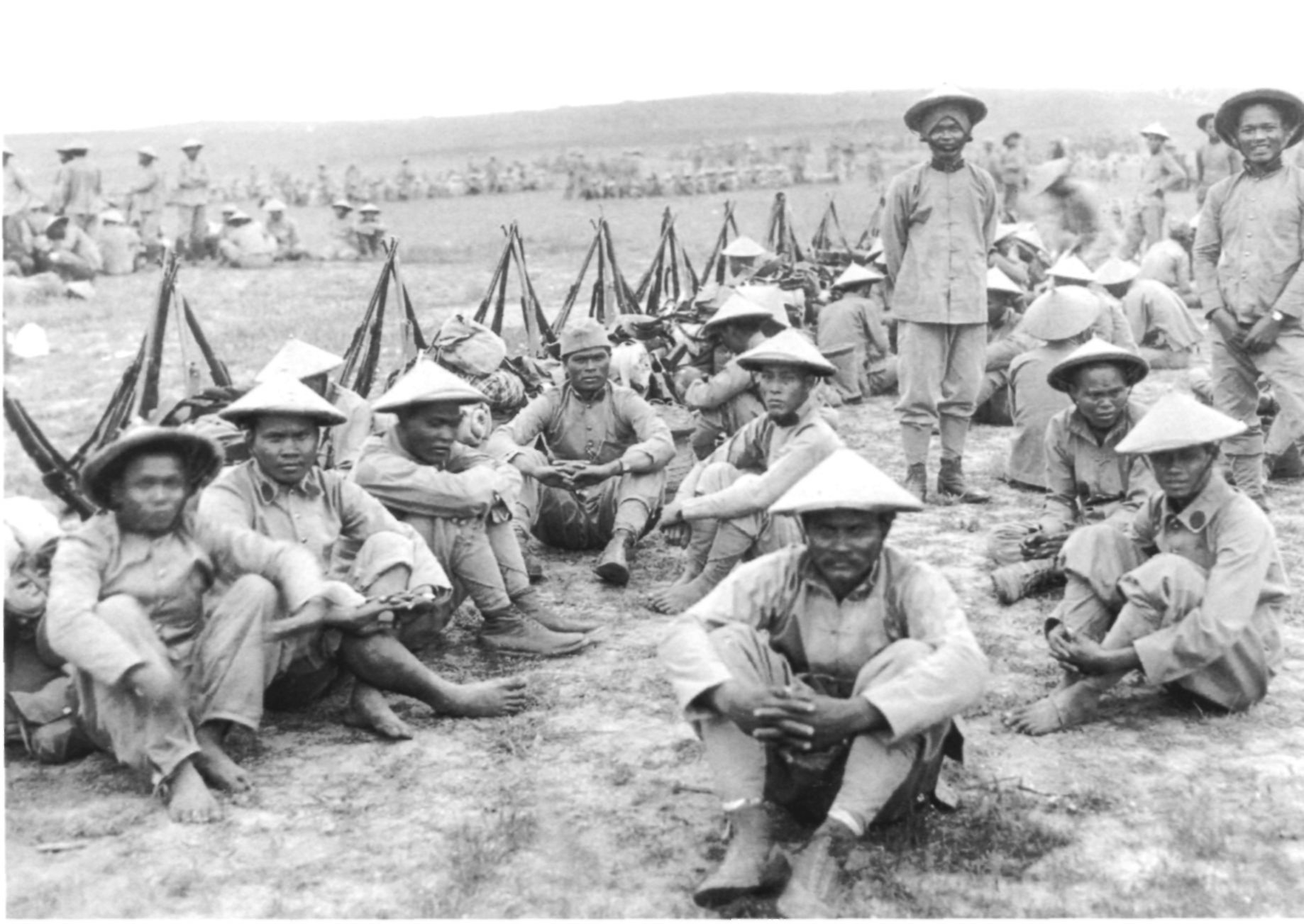
Annamite soldiers resting
At this point, France proposed to Spain to participate in a coalition in defence of Catholicism, a spirit shared by both nations. Moreover, Napoleon III saw Spain as the ideal ally because, at the time, it had no expansionist ambitions and, in addition, it possessed an exceptional naval base in the Philippines because of its proximity to that objective. And why did Spain accept, and what was its motivation? First of all, as has been pointed out, it was religiously motivated. But it was also a question of maintaining the territorial status quo and, to this end, a policy of prestige was considered essential. At that point in the 19th century, Spain was perceived internationally as a weak power, and therefore understood that, in order to preserve its still extensive dominions (Cuba, Puerto Rico, the Philippines), it was necessary to gain the respect of the great ascending nations.
Spain, as stipulated, sent a contingent of 1,500 men. It was the Captain General of the Philippines, Fernando de Norzagaray, who assembled the force that was to intervene in Vietnam. It was drawn from the Spanish garrison stationed in the archipelago, mostly indigenous Filipino troops led by Spanish officers. This contingent would ultimately prove decisive for the success of the military intervention. They led, for example, the heroic capture of Saigon (capital of Cochinchina). In this regard, it is important to point out that the Spanish-Filipino troops were more acclimatised to the adverse conditions of those parts of the world. The French, inexperienced in Southeast Asia, soon began to be decimated by the inclement weather and endemic diseases. Another important factor was that Spain allowed France to make repeated recruitments of Filipinos. This was essential, as what was initially envisaged as a quick action turned out to be a five-year war. Spanish intervention was therefore unequivocally key.
Spanish action was hushed up
Why, then, is there so little reference today to Spain’s intervention in this episode? Specially when its participation was essential. The answer lies partly in the little or relative interest that Spaniards generally showed in this episode. And, above all, because the foreign studies that dealt with the event, whether French, English or Italian, never consulted Spanish sources from the outset. They even intentionally silenced the Spanish action.
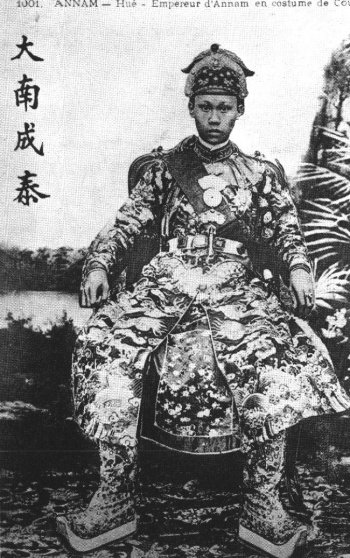
The emperor of the Kingdom of Annam Tự Đức posing on his throne.
Moreover, when the episode is discussed, the Spanish intervention is generally perceived as unnecessary, pointless and only useful for French interests. In the end, it would serve as a launching pad to lay the foundations for what would become French Indochina. But, really, did Spain derive no benefit from it, was it completely unsuccessful, and was its involvement so unconscious?
It is true that there were glaring mistakes, especially the failure to sign a prior agreement with Napoleon III setting out the aims and objectives and specifying the basis of the alliance. This was exploited by France, which took full leadership of the actions and acted without treating Spain as an ally. In fact, this could be seen perfectly well in the war indemnity, as Paris had to be pressured for years to collect its share. Moreover, the Spanish demand for an Annamite port was never met.
However, it is wrong to think that Spain did not benefit from this. For several ports were opened to Spanish trade; the possibility of access to the employment of coolies (indigenous workers) in the service of Spain; and, finally, France’s gaining a foothold in Southeast Asia led to an international balance in the Far East. This was essential, especially in the face of London’s growing power. It thus allowed both nations to support, in principle, Spanish continuity in the Philippines, and thus respect for the status quo.
Share this article
On this day
- 1690 The excellent Baroque painter Juan de Valdés Leal, nemesis of Murillo and famous for his "Vanitas" in the Hospital de la Caridad, dies in Sevilla.
- 1940 At dawn, Lluís Company y Jover, President of the Generalitat de Catalunya, is shot by a picket of soldiers at Montjuic Castle for the crime of military rebellion.
History of Spain