Spain obtained what we know today as Equatorial or Spanish Guinea in 1777 through the Treaty of San Ildefonso (1777) and the Treaty of El Pardo (1778) with Portugal.
BSpanish Guinea formed part of the Viceroyalty of the Río de la Plata, until its independence, which was fragmented into a series of republics (Uruguay, Argentina, Paraguay).
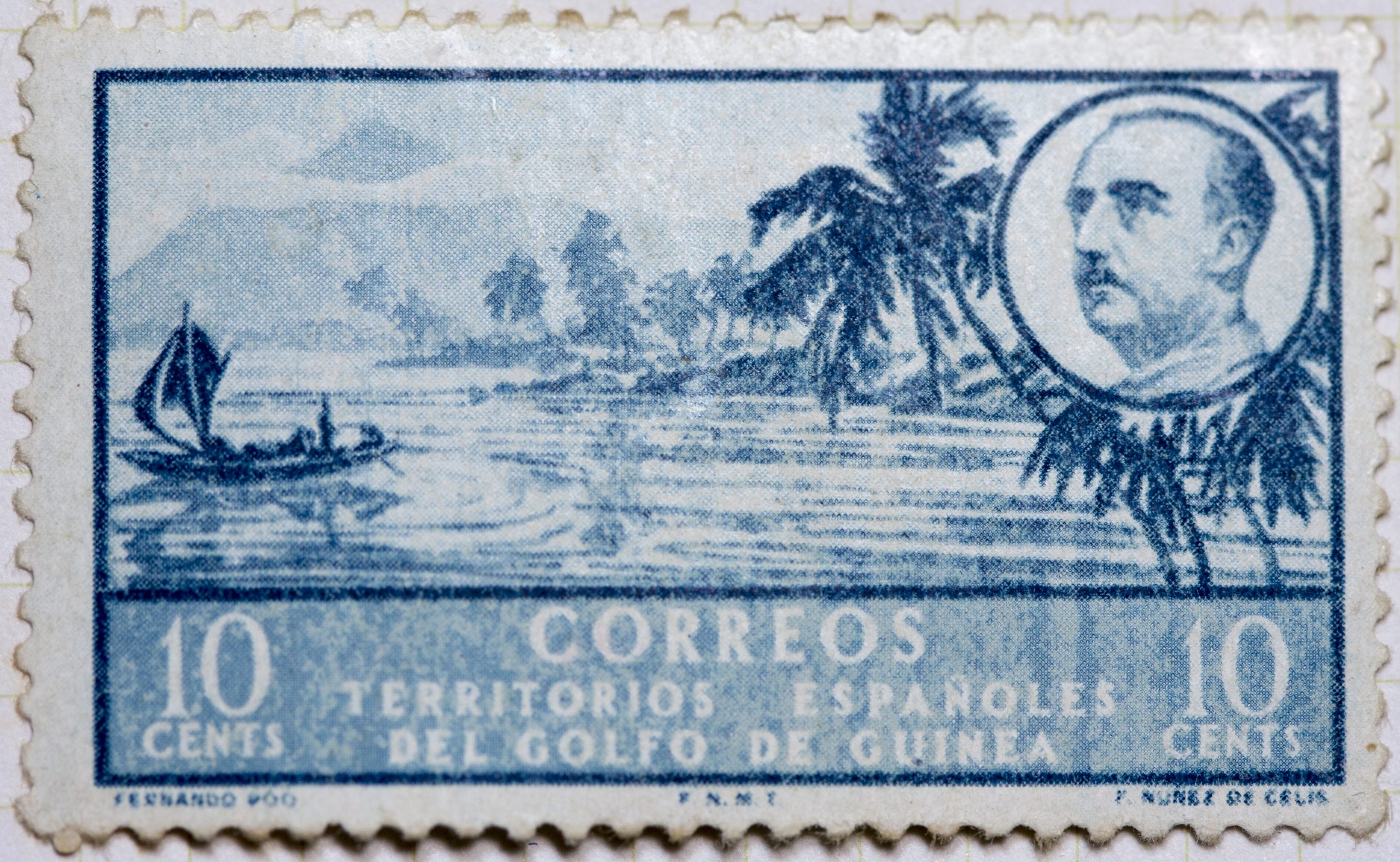 In 1843 D. Juan José Lerena re-established the Spanish presence in Malabo, to strengthen the rights of Spain, and in 1858 the first Spanish governor, Carlos de Chacón y Michelena, arrived. The mainland portion, now Rio Muni, became a protectorate in 1885 and a colony in 1900, the year in which a treaty signed in Paris determined the limits of the territory recognised by Spain.
Both territories (insular and continental) were united in 1926 as Spanish Guinea with its capital in Santa Isabel (now Malabo), on the island of Bioko. Even when Spain lacked sufficient economic forces to develop a major economic infrastructure during the first half of the 20th century, it managed to develop large cocoa plantations on Bioko Island with thousands of imported Nigerian labourers as braceros. At independence in 1968, largely as a result of this system, Equatorial Guinea had one of the highest per capita incomes in Africa.
Spain also helped Equatorial Guinea achieve one of the highest literacy rates on the continent as well as a remarkable network of health facilities, with patients coming from as far away as South Africa for surgery. In 1956 the territories were organised as the Province of the Gulf of Guinea and in 1959, the Spanish territories in the Gulf of Guinea acquired the status of Spanish provinces, joining the rest of the metropolitan provinces. The territory was divided into two provinces: Fernando Poo and Rio Muni, and renamed the Spanish Equatorial Region. In 1963, Guinea gained regional autonomy until independence in 1968.
Sources
This post was translated from:
(2021) ‘La Guinea española’, 15 August. Available at: https://frikihistoria.wordpress.com/2021/08/15/la-guinea-espanola/ (Accessed: 15 August 2021).
Source:Cuenta lo que fuimos
Share this article
On this day
- 1690 The excellent Baroque painter Juan de Valdés Leal, nemesis of Murillo and famous for his "Vanitas" in the Hospital de la Caridad, dies in Sevilla.
- 1940 At dawn, Lluís Company y Jover, President of the Generalitat de Catalunya, is shot by a picket of soldiers at Montjuic Castle for the crime of military rebellion.
History of Spain