


May 18, 2025
Source: Web Hispania
She escaped a convent, crossed the Atlantic, and became a decorated soldier in the Spanish Empire—while disguised as a man. Catalina de Erauso, known as the Lieutenant Nun, lived a life that defied every convention of 17th-century Europe. Her story is not just one of war and adventure—it’s a chronicle of rebellion, identity, and the price of survival in a world built to contain her. A sword, a habit, and a myth still debated.
Catalina de Erauso, known as the Lieutenant Nun, defies categorization. A runaway nun and a soldier. A duelist and a fugitive. A heroine and a criminal. A woman who lived as a man in the armies of the Spanish Empire during the 17th century. Her life was so extraordinary that, even four centuries later, it continues to perplex historians, moralists, feminists, chroniclers, and military experts alike.
This is no fiction. Catalina truly existed: she fought, killed, loved, lied, and confessed. Her story, partially preserved in a supposed first-person memoir, has become a blend of legend and historical document. But beyond the anecdotes and the intrigue, Catalina represents a fascinating crack in the societal order of her time: a crossroads where gender, power, violence, and faith all collided.
The Making of an Erauso
Catalina was born around 1585 in San Sebastián, into a military family. Her father, Miguel de Erauso, was an infantry captain; her mother, María Pérez de Galarraga. In that world of honor, weapons, and obedience, Catalina was sent to the Dominican convent in San Sebastián as a child. The plan was clear: she was to become a nun and fulfill the destiny expected of a daughter.
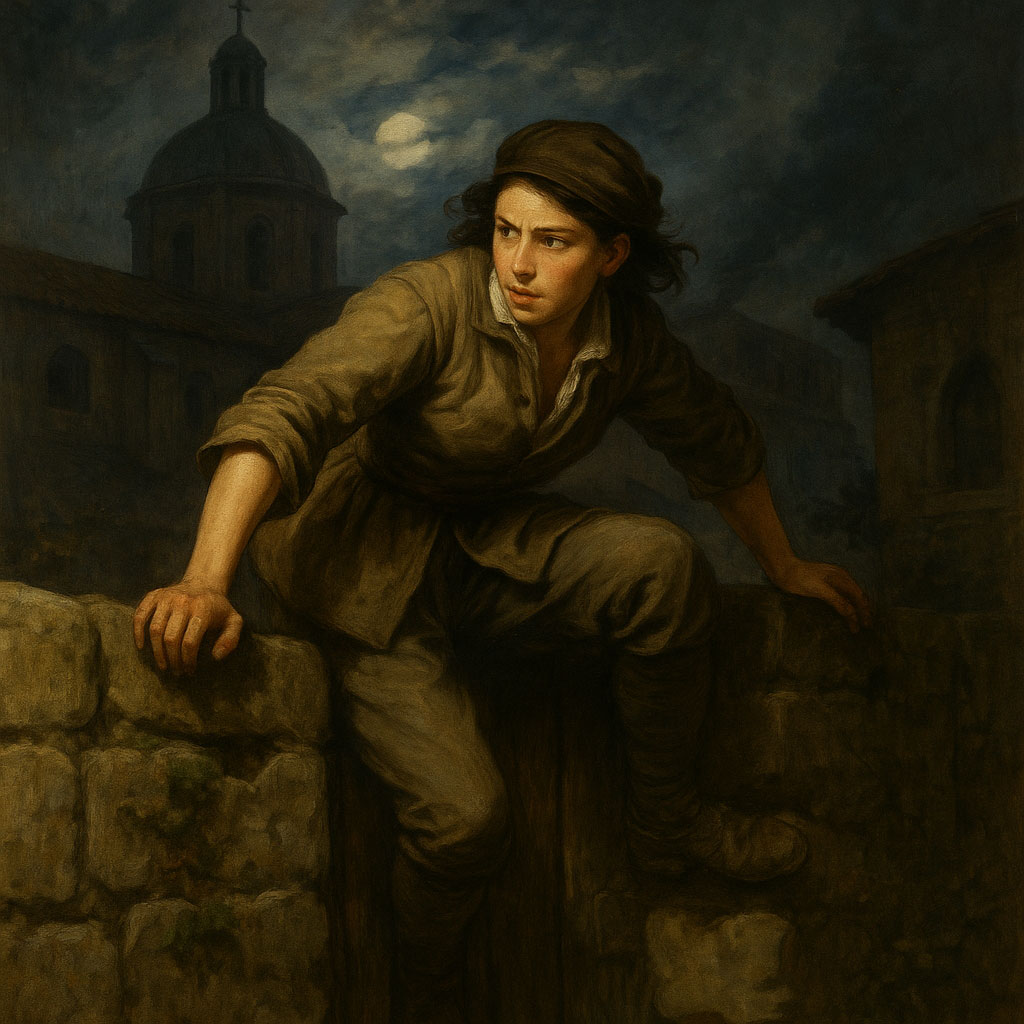
The great escape. From the habit to the world beyond. (AI-generated illustration by ChatGPT)
But Catalina had no intention of accepting such confinement. Her rebellious spirit clashed with the walls of the convent, and after years of conflict, she escaped disguised as a man.
Thus began a life that broke every rule: dressed as a man, under false names, Catalina entered a world forbidden to her gender—the world of war.
The First Uniform: Francisco de Loyola
Her first male identity was Francisco de Loyola. Under that name, Catalina arrived in Valladolid, worked as a page in a noble household, and faced a startling moment: her own father came to visit the house and did not recognize her. That was enough to make her flee once again.
She later enlisted as a cabin boy on a ship bound for the Americas. After crossing the Atlantic, she arrived in the New World and began her military career in the Spanish army. She fought in Panama, Chile, Peru, and Argentina, always as a man, and took part in campaigns against the Mapuche people in southern Chile. Her swordsmanship quickly earned her the rank of lieutenant—and notoriety.
Duels, Blood, and Glory
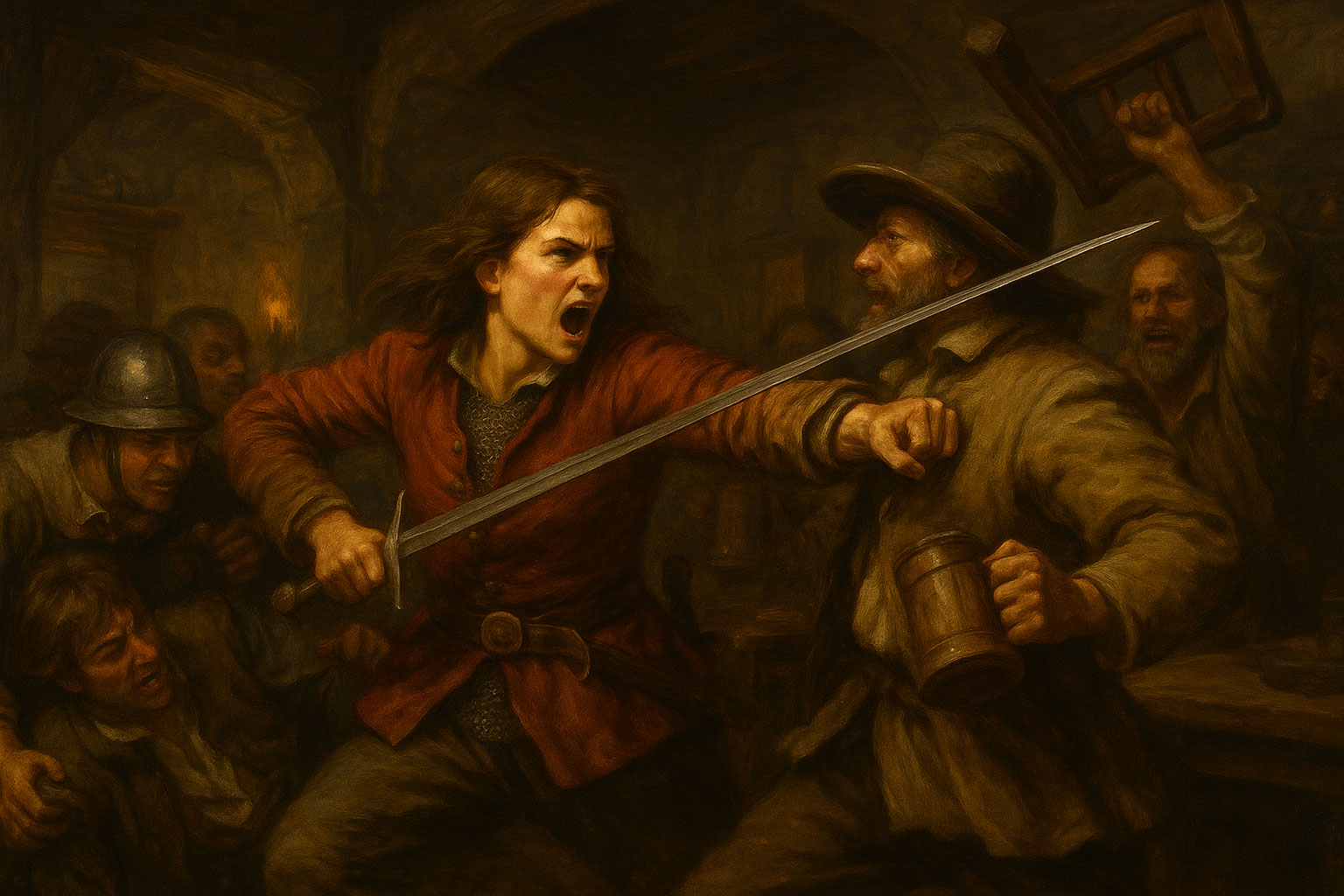
Brawl in disguise. Catalina fights like a man—but on her own terms. (AI-generated illustration by ChatGPT)
Catalina was not just a soldier. She was a duelist, a brawler, a gambler, a rogue, and an occasional murderer. Her memoirs are filled with scenes of street violence: fights over honor, jealousy, or debts. In Lima, in Cusco, in Trujillo—everywhere she went, she left behind a trail of chaos.
On one occasion, she killed a man in broad daylight. In another, she seriously wounded an unknown opponent in a night duel, only to discover later it was her own brother, Miguel de Erauso. She fled, devastated, never revealing the truth.
Amid this whirlwind of violence, there were moments of near redemption and even dark comedy: in Tucumán, she fell into the affections of a young woman who wanted to marry the “brave lieutenant.” Catalina disappeared just before the wedding.
I Am a Woman—and a Virgin
In Concepción (Chile), after yet another bloody incident, Catalina sought sanctuary in a convent while wounded and asked for confession. There, she revealed her true identity to the bishop. The scandal was enormous. Not only was she a woman, but she claimed to have maintained her virginity throughout her years living among men.
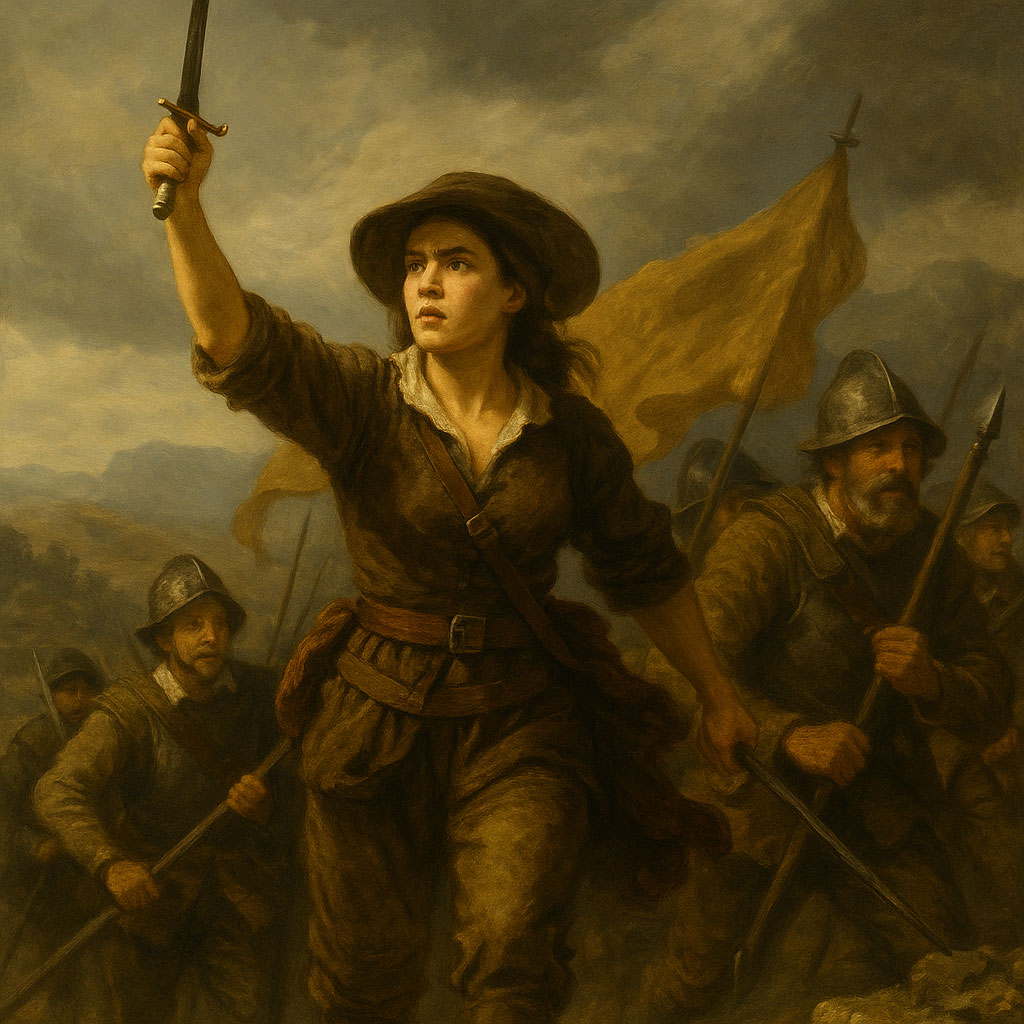
Marching into legend. Catalina leads not by rank—but by will. (AI-generated illustration by ChatGPT)
The bishop ordered a medical examination by local matrons, who confirmed both her sex—and her virginity. In a twist worthy of a farce, the Church chose not to punish her, but rather to interpret her case as a sign of divine providence.
Before the King and the Pope
Catalina was sent back to Spain. In Madrid, she was granted an audience with Philip IV, who, instead of punishing her, awarded her a military pension for life as a lieutenant. Not only did he spare her, he authorized her to continue dressing as a man.
Later, she traveled to Rome and met Pope Urban VIII, to whom she confessed her story. Amazed, the pontiff granted her a special dispensation and, according to some versions, even offered her a position in the Papal Guard (which she declined).
Thus, the runaway nun who had fled a cloistered life returned to Europe as a heroine and an international curiosity.
The Return to Obscurity
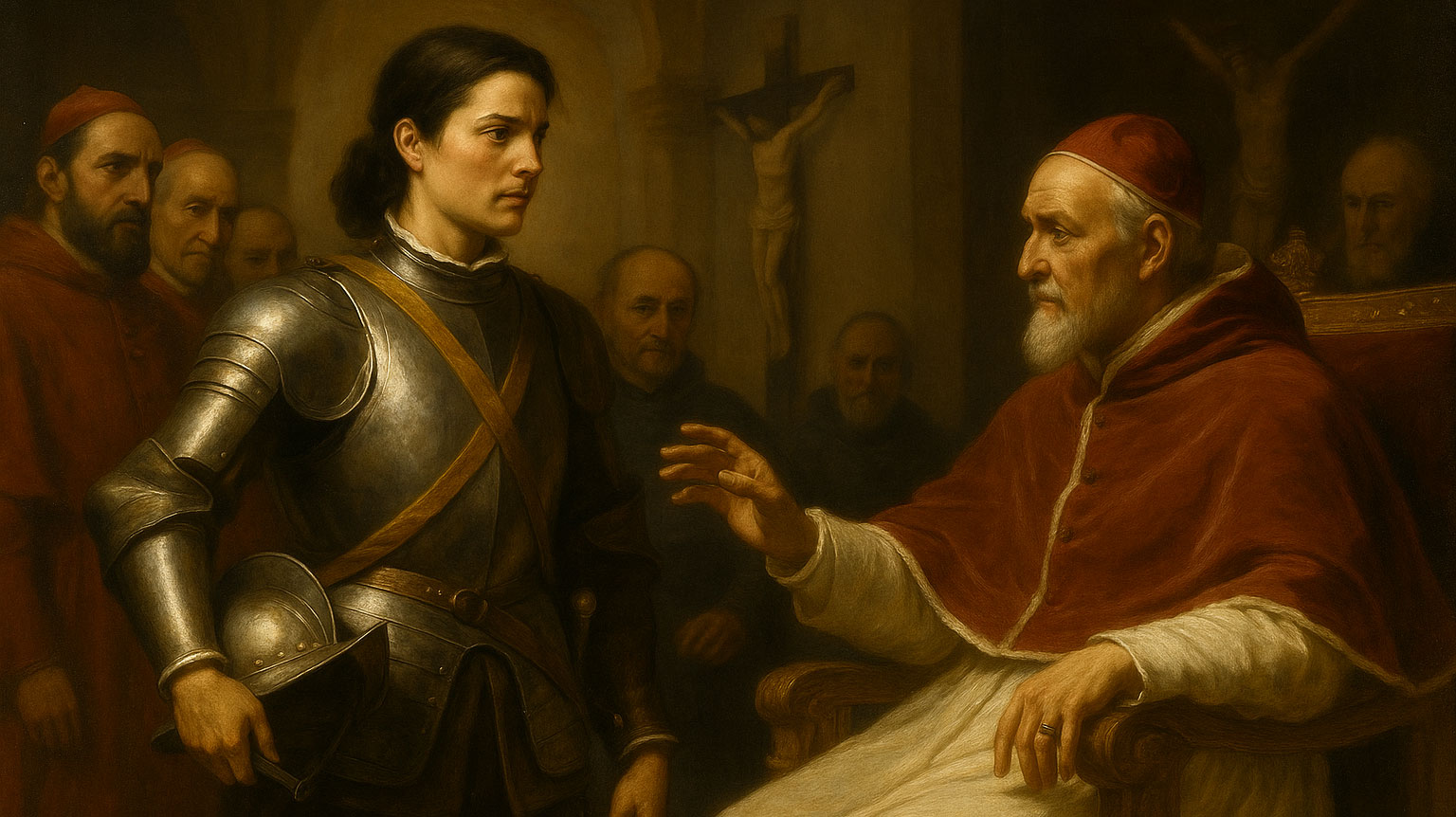
Between armor and absolution. Catalina confesses her truth to Rome. (AI-generated illustration by ChatGPT)
In her later years, Catalina returned to the Americas, settled in Mexico, and made a living in the transport business. She lived out her days dressed as a man, far from the battlefield, and died around the age of 60, likely in Veracruz, leaving her estate to the poor.
An Uncomfortable Legacy
The story of Catalina de Erauso has been interpreted in countless ways: as a transgender pioneer, as a proto-feminist figure, as a brutal mercenary, or as a product of Spain’s imperial machinery.
Each reading reflects both the character and the era interpreting her. Catalina lived between the sword and the habit, between obedience and escape, between glory and guilt. She was no role model—nor did she want to be. Her story offers no clear moral. But it does leave a memorable crack in the rigid structures of gender, identity, and power.
Hero, Monster, or Myth?
Catalina was all of these. Her life is an anomaly—an exception that, precisely because of that, reveals the limits of her time. She was neither saint nor martyr. She was tough, skilled, and at times, cruel. She lived as she wanted… or as she was able.
Her portrait now hangs in Spain’s Army Museum, in the Hall of Heroines. That may say as much about her legacy as her wounds, her crimes, or the discarded habit she left behind.
Sources
- Sotto y Montes J de. Semblanzas de algunas heroínas españolas. Revista Ejército. 1966;(20):51–77.
- Erauso C de. Historia de la Monja Alférez, escrita por ella misma. México: Ediciones Botas; 1944.
Share this article
On this day
No Events
History of Spain