


May 19, 2025
Source: El Diario Vasco
Is Charles C. Mann offering groundbreaking insight in 1493, or just reviving old legends with modern polish?
In this detailed critique, historian Carlos Rilova Jericó argues that Mann’s narrative recycles outdated Anglo-centric tropes about Spanish America while ignoring essential figures, facts, and scientific achievements. A compelling call to look beyond mainstream narratives and bestsellers.
Over many years as a historian, I’ve become convinced (hopelessly so, for now) that the most fortunate Spanish historian is always the English-speaking hispanist.
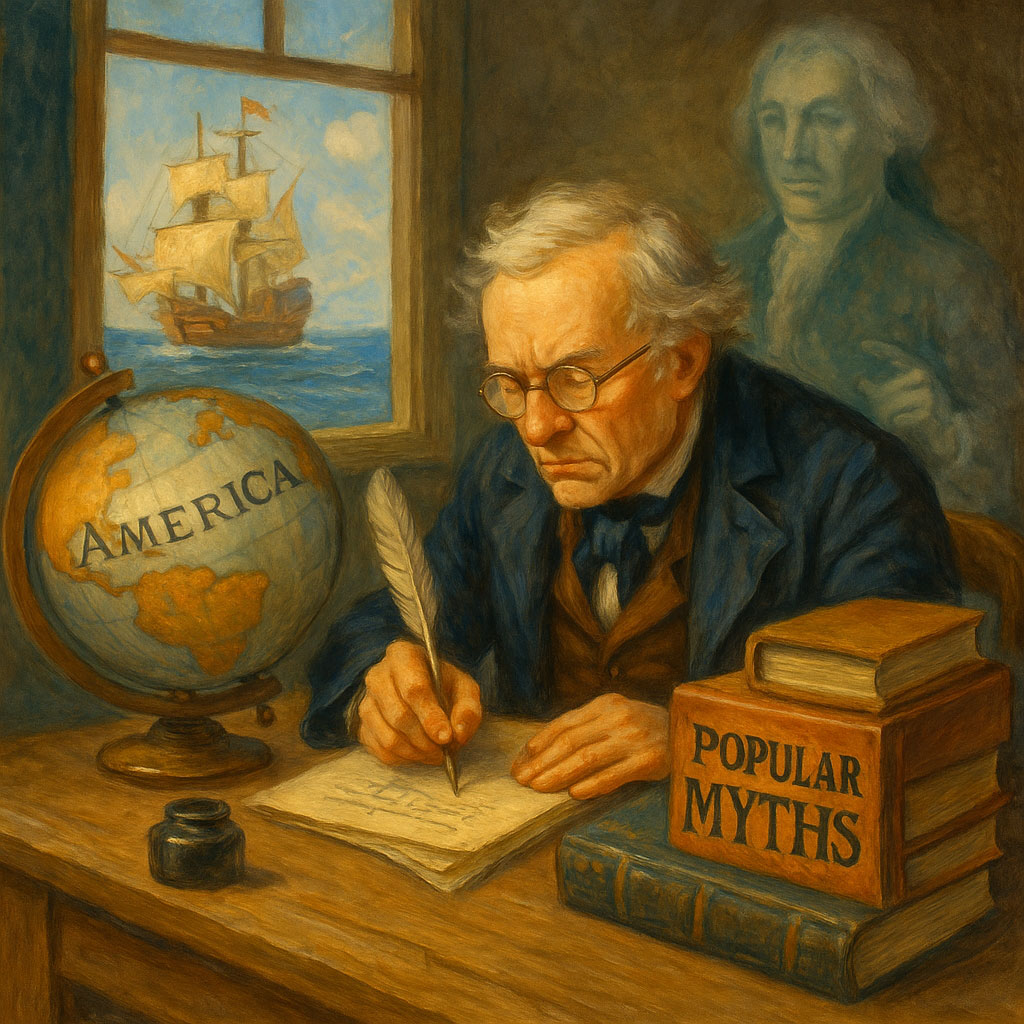
AI-generated satire on shallow historical narratives and the invisibility of Spanish contributions in mainstream accounts.
This week, I came across yet another example of this truth—still unchallenged—in an interview in La Vanguardia with Charles C. Mann, an American writer and journalist from New England, discussing his new book on the Spanish enterprise in America titled 1493, which seems to be a sequel to 1491.
That earlier work, published in Spanish in 2022, explored what America was like one year before the arrival of Europeans—mainly Spaniards—led by Columbus, seeking a trade route that bypassed the Turks.
In 1491, Mann, with the flair typical of successful Anglo-American popular history, delved into what’s been called “ecological history,” showing how Native Americans were already transforming their environments prior to European contact.
1493 picks up where 1491 left off, showing how the arrival of Europeans transformed the global environment through crop exchanges between the Americas and Europe. But, according to the interview, the book goes further—discussing Old World diseases that decimated Indigenous populations, how yellow fever boosted the African slave trade due to some immunity among Africans, and how Spanish-American trade with Asia helped topple the Ming dynasty, in part due to Chinese demand for silver.


While Mann’s 1493 may seem fresh and innovative, a closer look reveals nothing truly new. Once again, the violence attributed to the Spanish is subtly judged in a tone never used for Anglo-American counterparts, despite them also conducting violent, traumatic conquests in the 16th and 17th centuries—usually accepted as historical facts without moral panic.
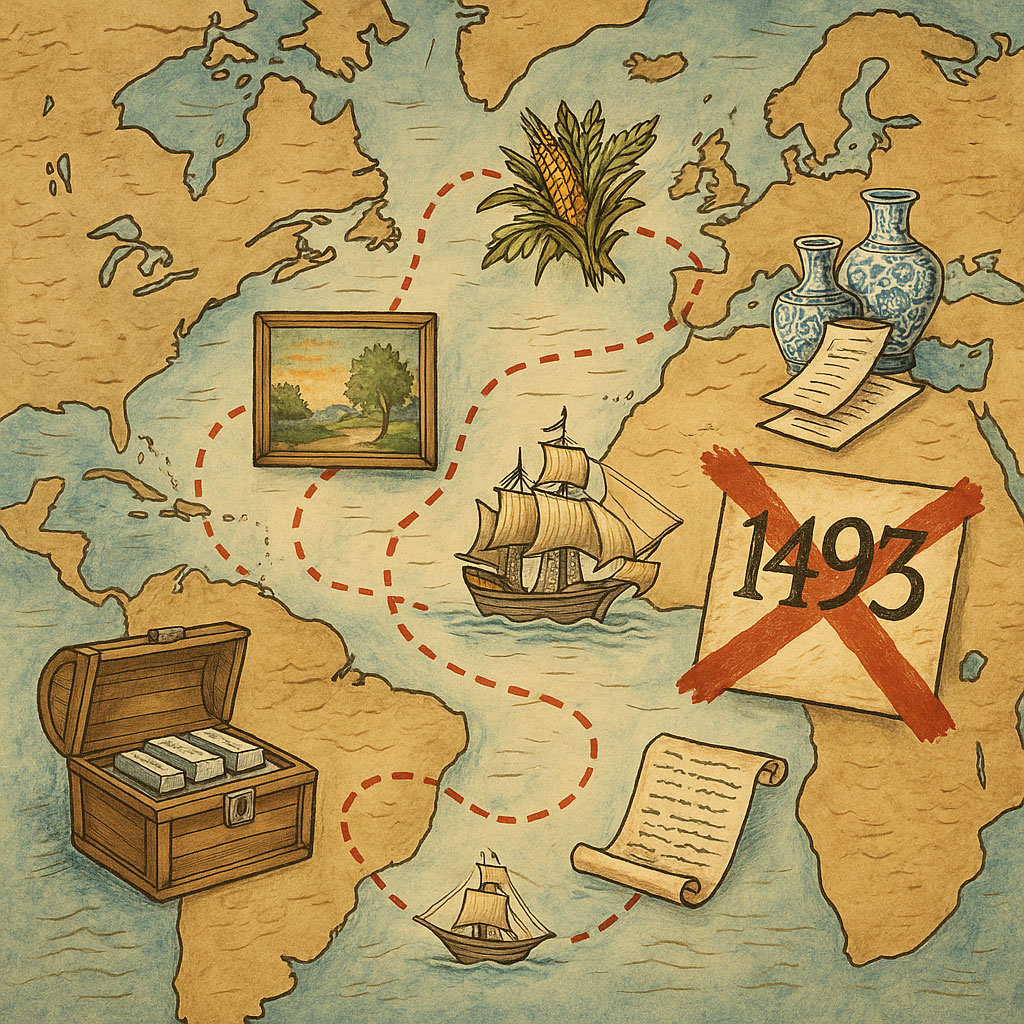
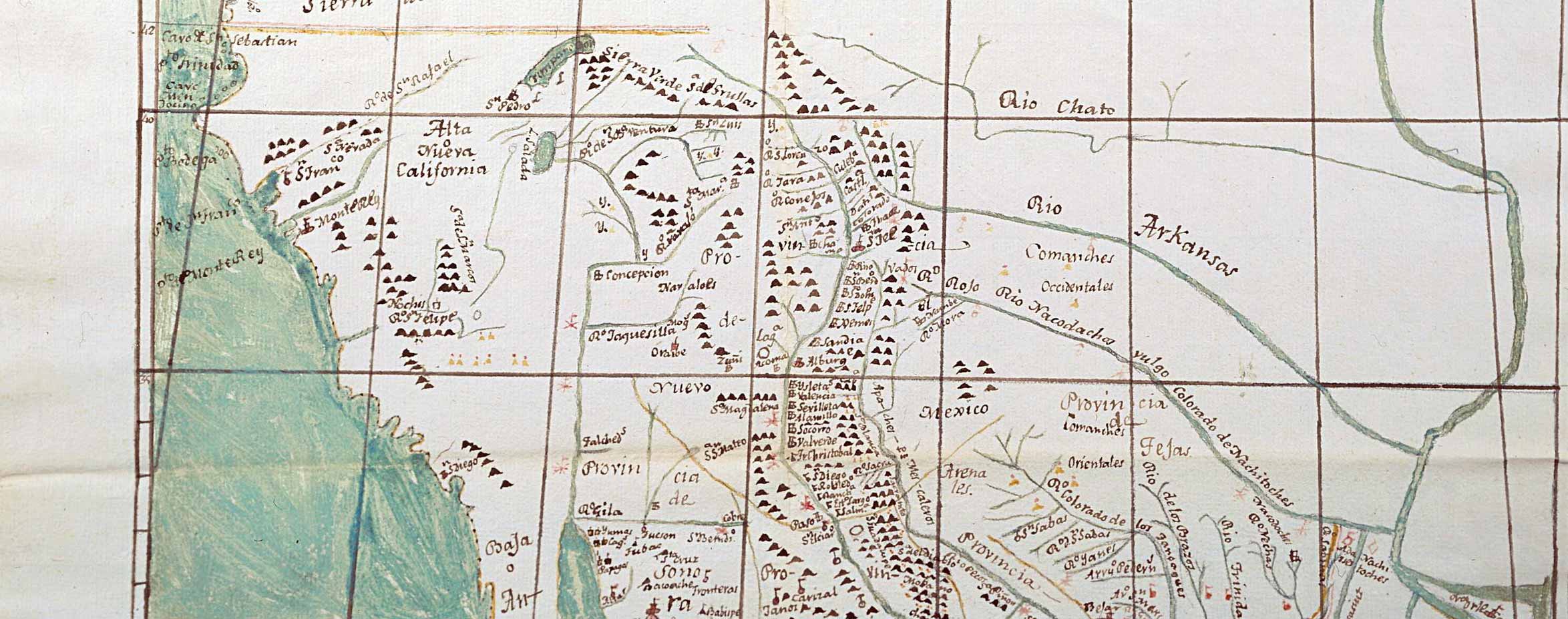
AI-generated map allegory of the global Spanish trade, obscured in popular historical discourse.
The association “Héroes de Cavite,” with whom I’ve collaborated, responded to 1493 on April 17 in El Mundo, pointing out its errors and omissions compared to other European colonial models.
Most notably, Mann ignores the Spanish-Asian-American-European trade route—one of the longest-running and most significant pre-industrial global exchanges.
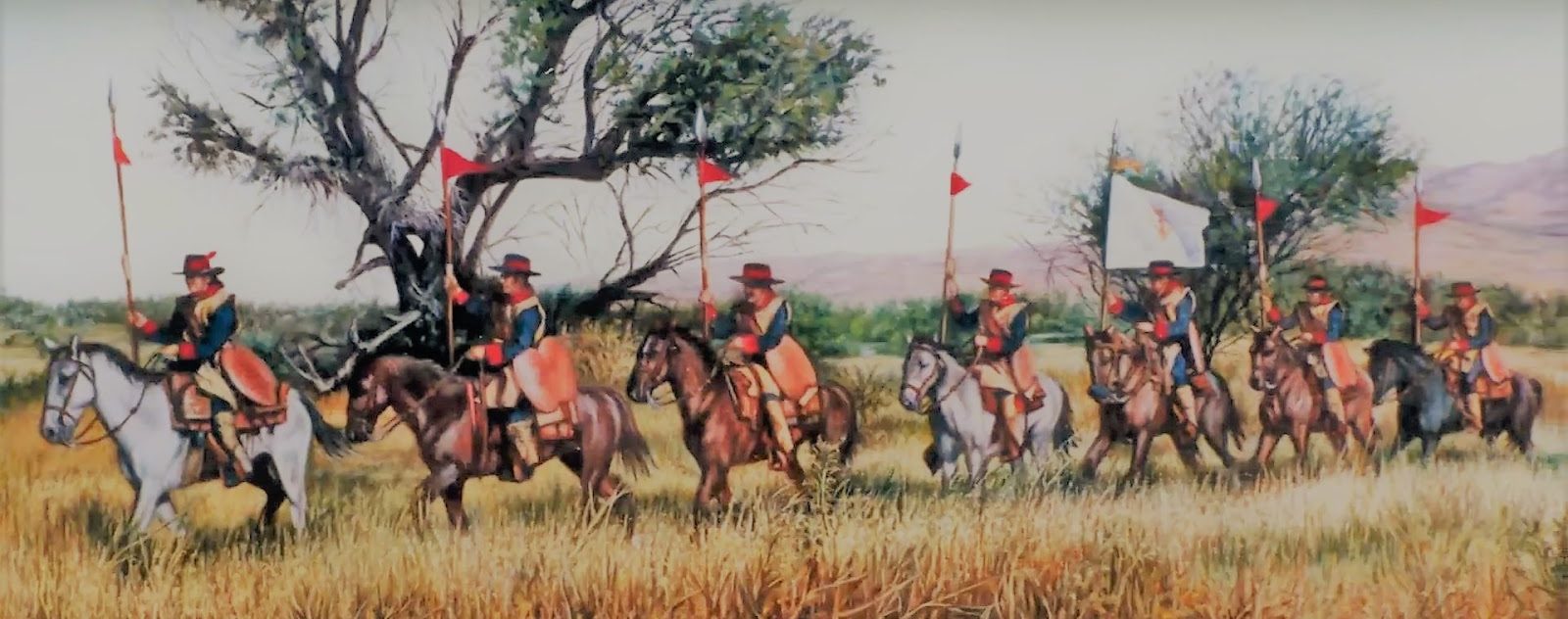
This omission reveals the stale scent of an old legend in 1493, where Spaniards are once again portrayed as loud, brutal conquistadors frozen in time around 1550, wearing plumed helmets and wielding muskets.
Why this gross simplification? One reason is the limited reach of Spanish-language historical publications, which rarely challenge international bestsellers like 1493.
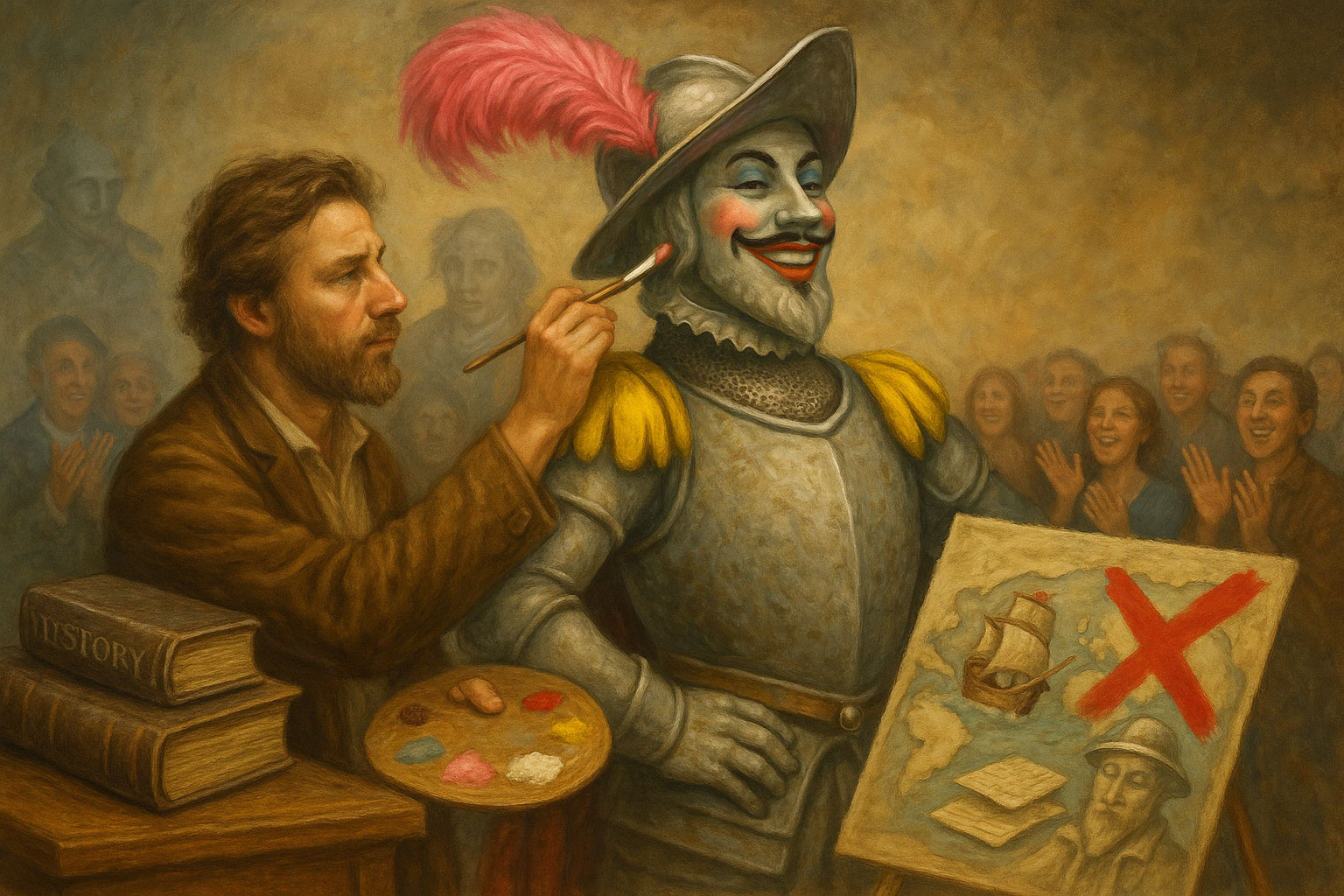
AI-generated allegory showing how bestselling history repaints legends to please modern audiences, leaving real scholarship in the shadows.
I’ve authored two biographies between 2022 and 2025—on Admiral Antonio de Gaztañeta and navigator Manuel de Agote—that contradict this tired Anglo narrative. Gaztañeta, for instance, is depicted in an early 18th-century portrait as a refined European gentleman, not a savage conquistador. He was a brilliant mathematician and naval strategist, not a bloodthirsty colonizer.
In 1727, Gaztañeta broke a British blockade over Portobelo not with brute force but with applied science, navigating global commerce networks linking Europe, Asia, and the Americas—thanks to knowledge pioneered by fellow Basque navigator Andrés de Urdaneta.
Similarly, Agote’s enlightened voyages through China in the late 18th century revealed British efforts to penetrate Chinese markets with opium due to a lack of Spanish silver—undermining Mann’s simplistic narrative about the Ming dynasty’s fall.
Readers should be wary of 1491 and 1493. What they offer is not new history but repainted old legends. Those seeking a true understanding of American or Asia-Pacific history should look elsewhere—despite those better sources being less visible in mainstream media.
Share this article
On this day
No Events
History of Spain