

January 4, 2026
Source: Web Hispania
Justice, sovereignty and the risk of a transition directed from outside
In the early hours of January 3, a historic turning point occurred in the Venezuelan crisis. The United States carried out a direct operation that culminated in the capture of Nicolás Maduro, who is currently in the custody of President Donald Trump, who has publicly explained how the operation unfolded. The Venezuelan regime, as it had been known until that moment, was dismantled within hours, giving way to an immediate reconfiguration of political power in Venezuela.
We are therefore not dealing with rumors or evolving information, but with a fait accompli that irreversibly alters the political balance of the country and the region. For that very reason, the central question is no longer what has happened, but what is going to be built from now on.
The fall of a dictator usually produces an immediate reaction of relief. In the Venezuelan case, that relief is understandable. Two decades of institutional destruction, systematic repression, mass impoverishment, and forced exile weigh too heavily to pretend moral neutrality. Maduro’s removal from power was necessary. It was inevitable. And, in historical terms, it is good news.
But the fall of a dictator is not the end of the story. Very often, it is not even its true beginning.
The fall does not equal the solution
One of the most persistent errors in contemporary political analysis is to confuse the removal of the visible face of a regime with the resolution of the structural problem. An authoritarian system does not end with its leader: it is sustained by power networks, economic interests, armed apparatuses, international complicities, and a legal architecture designed to ensure impunity.
That Maduro is no longer in power does not automatically mean that those structures have disappeared. The relevant question is what falls with him and what remains—and, above all, in whose name and according to which priorities the transition is being managed.
The speed with which the outcome unfolded and the immediate reorganization of power around Delcy Rodríguez, a central figure of the regime, a direct collaborator of the dictator, and an interlocutor with the U.S. government, raise an uncomfortable but legitimate question: whether we are witnessing the total defeat of the system that sustained Maduro or a limited exit agreement, aimed at resolving the personal problem of the fallen leader while preserving, wholly or in part, the structures that made the regime possible.
In such a scenario, negotiation would not necessarily respond to criteria of national stability or historical redress. It could obey far narrower and more opaque objectives: guaranteeing Maduro’s own impunity, ensuring the continuity of certain power networks, or facilitating preferential access to strategic resources for external actors. The absence of a transparent process and of a clear rupture with the core of the regime obliges, at the very least, the formulation of these questions.
Raising this doubt does not mean relativizing the crimes of the previous regime. It means recognizing that, historically, negotiated endings tend to protect the apparatuses more than the victims.
When the dictator becomes a bargaining chip
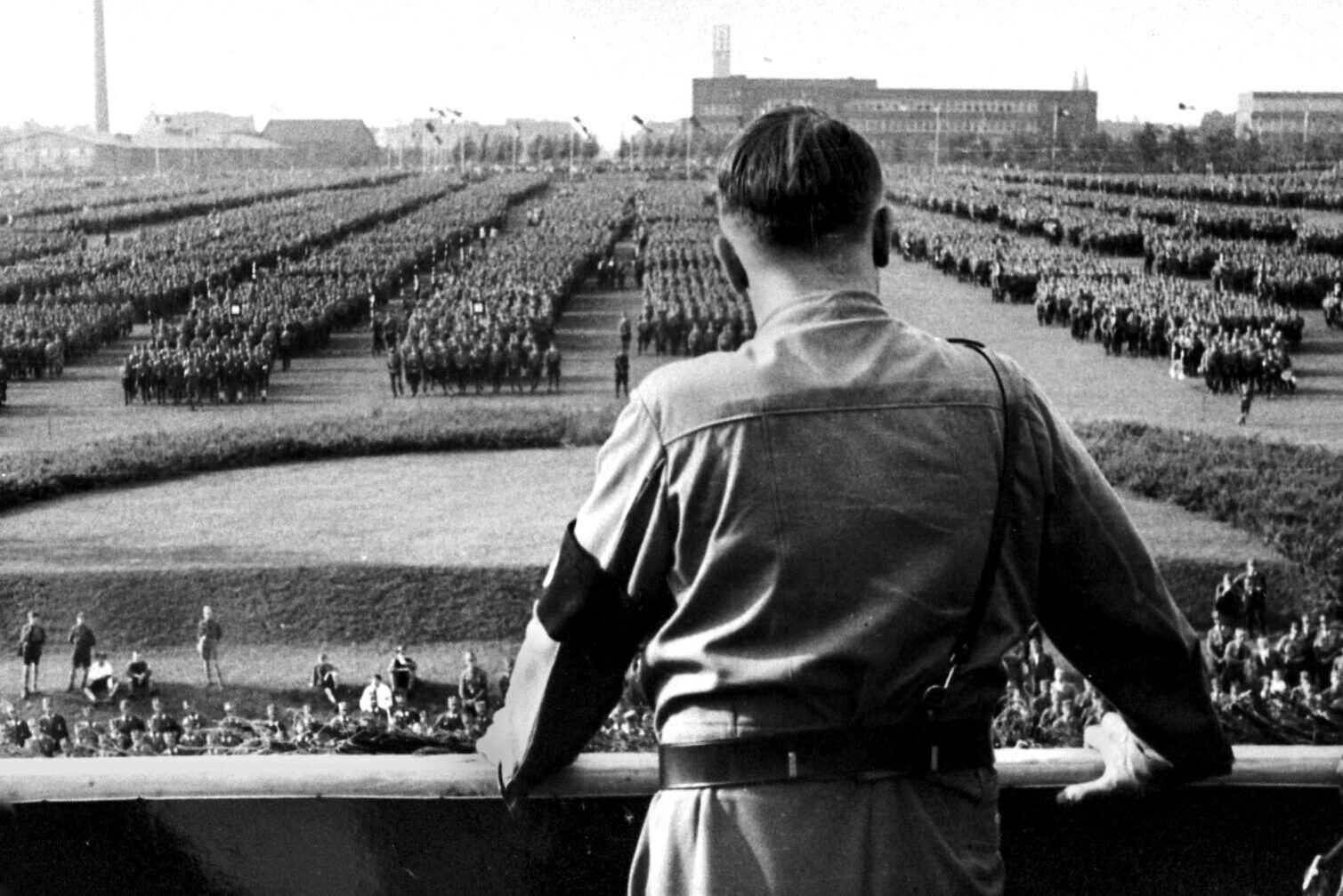
There is a critical moment in the life of every dictatorship when the dictator ceases to be useful even to those who sustain him. When his continuity threatens the survival of the system itself, the temptation of a deal emerges: a personal exit in exchange for immediate calm.
From the outside, such solutions are presented as pragmatic. From within, they usually translate into impunity.
Impunity is not merely the absence of criminal punishment. It is the absence of judicial truth, of clearly assigned responsibilities, of the identification of accomplices, and of the recovery of what was stolen. In practice, it becomes a reward: those who have plundered a country not only avoid prison, but retain part of the loot and evade accountability to their victims. It is, ultimately, the continuation of the system under new forms.
In the Venezuelan case, this risk is particularly grave. This is not merely a matter of authoritarianism or corruption, but of systematic human rights violations, lethal repression, and the penetration of narcotrafficking into the state. None of this can be resolved through a discreet exit for the fallen leader, no matter how spectacular his capture may have been.
Impunity as a poisoned foundation
Transitions built on impunity are often justified as the price to be paid for stability. However, historical experience shows that this price is paid twice: first in justice denied, and later in institutional fragility.
Without trials, there is no complete account of what occurred. Without an account, there is no collective memory or political learning. And without justice for the victims, there can be no closure or reparation. In that void, the same dynamics inevitably reappear under different names and discourses, because nothing has truly been confronted or resolved.
Dictators who were never tried, networks that were never exposed, illicit fortunes that never returned to their countries: this pattern repeats itself again and again. And it always leaves behind fractured societies and weak political systems, incapable of genuine regeneration.
To accept such a model for Venezuela would be to accept that millions of Venezuelans do not deserve justice, but silence—and that stability matters more than truth.
The day after: formal government and real power
Even if a process of accountability were to be guaranteed—something that remains to be seen—another fundamental question would still remain open: who truly exercises power in post-Maduro Venezuela.
Governing is not about holding office; it is about controlling strategic decisions: energy resources, foreign policy, security, and the economic architecture of the state. In scenarios of external intervention, the risk of a merely formal sovereignty is high. Symbols are preserved, but key decisions are made elsewhere.
Here a central concern arises from the perspective of the Hispanic world. Venezuela is not an isolated case nor a peripheral territory: it is one of the great nations of the Hispanic world, with a history and an identity that cannot be reduced to a geopolitical variable.
The temptation of the puppet state
Hispanic American history is full of states that preserved their juridical independence while losing their real autonomy. Formally sovereign countries, yet strategically conditioned for decades. External tutelage is rarely presented as permanent; it is always described as “temporary,” “necessary,” or “technical.” But once dependencies are established, dismantling them becomes extraordinarily difficult.
Local elites adapt, incentives realign, and sovereignty turns into rhetoric. The language changes, the partners change, but dependence remains.
Accepting this model for Venezuela would mean replacing one form of subjugation with another—perhaps less brutal, perhaps more presentable, but equally corrosive to national dignity.
Venezuela as a warning for the Hispanic world
This debate does not end with Venezuela, nor can it be dismissed as an exceptional episode. What is at stake is the precedent set for the Hispanic world as a whole when the fall of a dictatorship is managed from outside and decided without those who have borne the real cost—political, personal, and vital—inside the country.
Recent reports that Donald Trump does not trust the leadership of María Corina Machado, nor the electoral mandate represented by Edmundo González Urrutia, are not a minor detail. They are a clear signal that the legitimacy arising from Venezuela’s internal political process may not coincide with the legitimacy deemed acceptable by the external actor that forced the outcome.
Here lies the central risk: that the transition will not be articulated around those who have earned popular support within Venezuela, but around figures considered more manageable, more predictable, or more aligned with external interests. It would not be the first time this has happened. And it has never ended well.
Recognizing that the United States is the only actor with the real capacity to execute an operation of this magnitude does not require accepting without criticism the political model it may impose afterward. Geopolitical realism does not demand moral silence, nor does it require accepting that the sovereignty of a Hispanic nation is secondary to the strategic convenience of others.
When peoples cease to be subjects of their own reconstruction and become objects of administration, the result is not a fragile democracy, but structural dependence.
Justice, sovereignty, and reconstruction
The reconstruction of a nation devastated by dictatorship cannot rest solely on the disappearance of the tyrant. It requires justice, to offer reparation to victims and establish responsibility; sovereignty, so that fundamental decisions emanate from the national political body itself; and truth, so that the past is neither rewritten nor diluted through pacts of convenience.
Separating these elements is not pragmatism—it is a guaranteed recipe for failure.
Without justice, corruption does not disappear: it adapts.
Without sovereignty, politics is emptied of substance and becomes tutelary management.
Without truth, history is falsified and crime is normalized.
A transition that disregards the internal electoral mandate, tolerates the impunity of those responsible for the regime, and is articulated under external tutelage may be presented as an immediate success. But in the medium term, it does not reconstruct a nation: it replaces it.
And it is at this point that the question ceases to be Venezuelan and becomes historical:
Can a Hispanic nation be rebuilt on the pillars of impunity and external tutelage?
Share this article
On this day
- 912 Reconquista: In Cordoba, Abderraman III is proclaimed emir. He will take the Cordoba emirate to its highest political and religious expression: the caliphate.
- 1780 Spanish cartographer Bernardo de Miera publishes the first map showing all the waters, mountain ranges and deserts between Rio Grande and Arkansas river.
History of Spain