
Source:Sonrisas en el camino
Spanish heritage in the U.S.
The Spanish heritage in the U.S. is unquestionable, regardless of whoever it may concern. Two thirds of the United States were Spanish, even longer Spanish than American. Discoveries, foundations of cities, missions, presidios, advances and roads opened in a vast continent, full of dangers. And if we get into the help given to obtain the independence of the 13 colonies, we will never finish. Breed crows and they will gouge your eyes out because these North Americans soon forget the support and, what is more serious, try to erase that trace.
But, without getting lost in other paths or going over the hills of Ubeda, I want to focus on a specific discovery, on a great discovery: the Grand Canyon because the first European to see it, to enjoy its grandeur, was a Spaniard, specifically García López de Cárdenas.

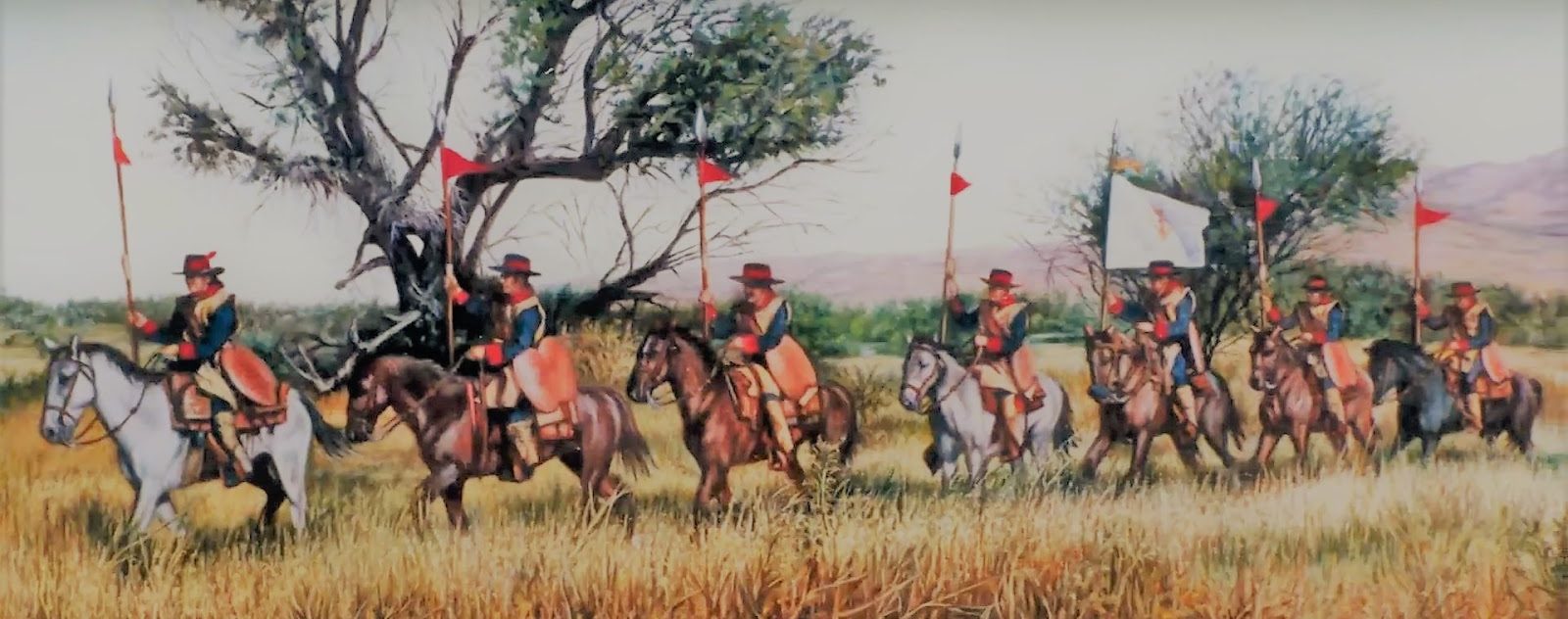
The Conquest of the Colorado by Augusto Ferrer-Dalmau Nieto
And it is true, it was already there, it was not discovered, for those who have a very thin skin, for lovers of the black legend or for those who throw away everything achieved by Spain, branding it as genocidal or homophobic. But, although it was already there, although the native tribes knew about it, it was a Spaniard who put it on the map and identified it.
A gigantic gorge
To situate ourselves. The Grand Canyon is a gigantic gorge, in the north of the state of Arizona, excavated by the Colorado River. A natural formation with an average of 16 km. wide, 1.6 km. deep and 446 km. long, and easily distinguishable by its layers of red rock, revealing millions of years of geological existence. In short, it is a wonder of nature worthy of contemplation. And as I say, despite whoever it may concern, it belonged for three centuries to the Spanish crown. Small details that seem to want to forget.
It turns out that López de Cárdena was an explorer who was participating in the expedition organized by Francisco Vázquez de Coronado to find the 7 cities of Cíbola that, supposedly, were full of gold. After reaching what is now Arizona and New Mexico, Coronado decided to send out small search parties to locate the trail of these mythical cities.
Together with 12 men and following Coronado’s instructions to locate a large river he had heard about from the natives, López de Cárdenas crossed the desert on a long and arduous journey. Twenty days of toil it took them to reach the river, but the sight of it left them speechless. The landscape that opened up before those pioneers, before those daring explorers, left them speechless.
A colossal adventure
Called the “Gran Barranca”, they contemplated an enormous canyon carved out of the earth over the centuries. Impossible distances, vertigo-inducing drops and astonishing reddish color. They spotted the river at the bottom, very small, so small that it looked like a stream and they called it “Tizón”. Although they tried to go down to the river to quench their thirst and fill up with water, they could not do so because of the steepness of the landscape.
Yet another adventure of those hardy explorers who travelled across much of North America, another discovery, another splendorous vision and yet another stone in the foundations of what would become, much later, the USA.
Share this article
On this day
- 1238 The Moorish kingdom of Valencia capitulates to Jaime I of Aragon.
- 1531 Nuño Beltrán de Guzmán founds the town of San Miguel de Culiacán (current Culiacan Rosales, México)
- 1540 Pedro Anzúrez de Camporredondo founds the town La Villa de La Plata de la Nueva Toledo (current Sucre, Bolivia) in the location of the old hamlet of Chuquisaca.
- 1544 Lorenzo Martín founds the city of Tamalameque (Colombia), refounded in 2680 and 1747.
- 1547 Date of the supposed birth of Cervantes.
- 1551 Alonso de Olalla and Hernando de Alcocer found the city of Villeta de San Miguel (Colombia)
- 1573 Captain Antonio Clavijo founds the city of San Miguel de Salcedo (Ecuador) as San Miguel de Molleambato.
- 1578 A group of Spaniards found the city of the Royal Mines of San Miguel de Tegucigalpa, the current capital of Honduras together with Comayagüela.
- 1620 Diego Gómez de Salazar founds the city of San Miguel de Acarigua (Venezuela) by order of Governor Francisco de la Hoz Berrio y Oruña.
- 1833 Fernando VII dies and the problem of his succession arises, which will lead to the First Carlist War.
- 1864 Miguel de Unamuno (d. 1936) is born in Bilbao.
- 1893 Melilla War: Border clashes against the Kabyles which last until 5 March 1894 and end with the Treaty of Marrakesh.
- 1911 War breaks out between Italy and Turkey over the possession of Tripoli.
- 2758 The English admiral Horatio Nelson is born.
History of Spain