
Source:ABC
The Naval Museum of Madrid exhibits 39 medals that England minted believing it had defeated Blas de Lezo.
In the Battle of Cartagena de Indias (1741), England sold the bear’s skin before it was hunted. So much so that Admiral Edward Vernon had coins minted to spread the news of his victory over Spain, which, according to him, he could achieve with only six warships.
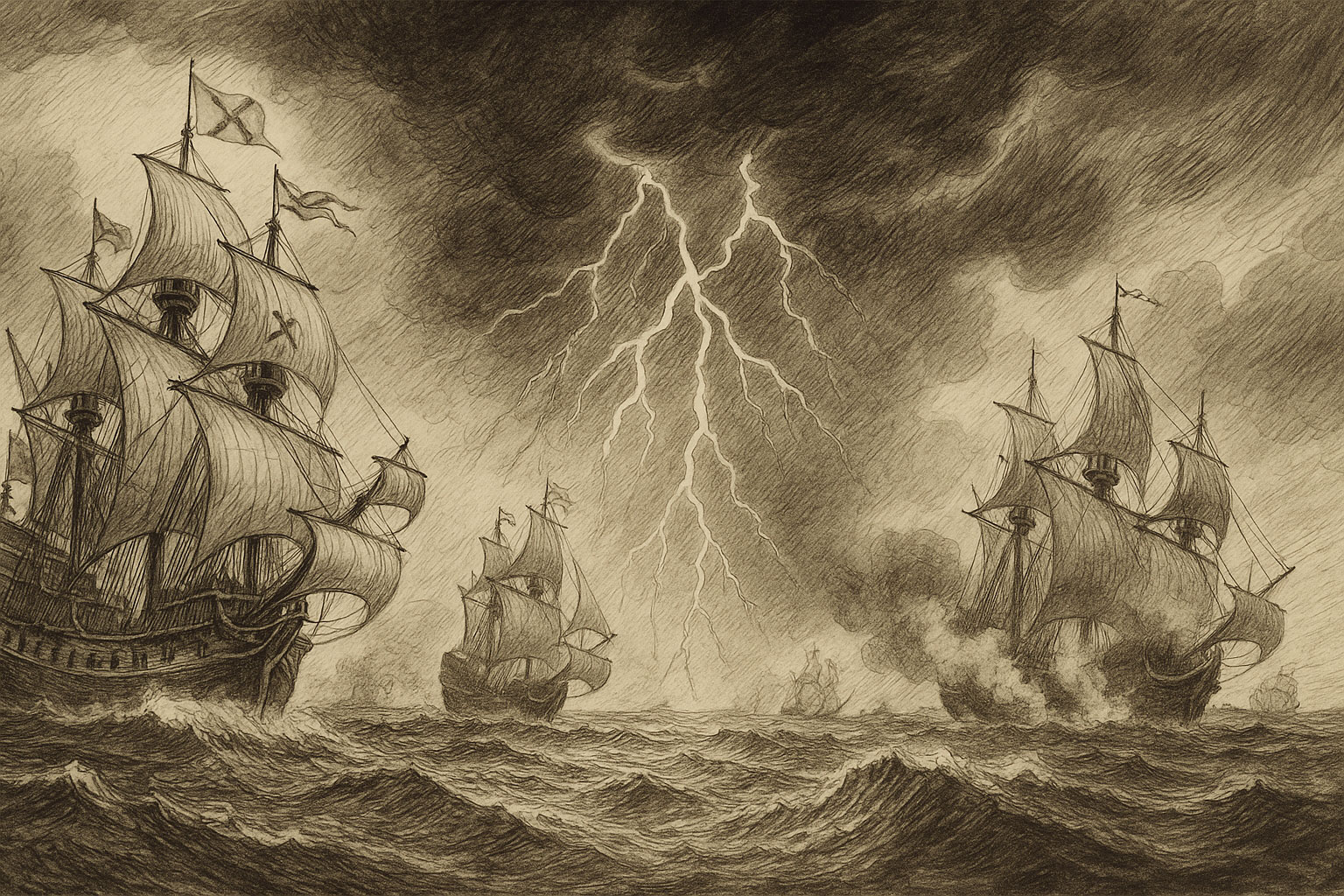
In the end, despite his 135 ships and 39,000 men – it was the largest naval deployment ever seen until the Normandy Landings – Admiral Blas de Lezo won, constituting one of the greatest feats in Spanish military history in the Americas.
However, in the midst of the fray and believing that with his greater force the Spanish would be beaten (there were only 1,000 men), Vernon sent a frigate to England with Spanish prisoners, anticipating the imminent and certain occupation of the Spanish capital in New Spain. Vernon lost, but his coins live on.
Thirty-nine of these medallions can be seen in the Naval Museum in Madrid, where they were donated by an antiquarian and a private individual in 2000. The Naval Museum’s first catalog already included three of these medallions. “The most widespread piece in the collection bears an inscription, in English, which reads ‘The pride of Spain humiliated by Admiral Vernon’ and on the reverse: “Authentic British hero, took Cartagena in April 1741”, explains Carmen López Calderón, curator of the Naval Museum, who explains the details of the collection.
Two figures have been engraved on the obverse of the medal. One, erect and victorious, that of Admiral Vernon. The other, kneeling and imploring, is identified as “Don Blas” and alludes to the Spanish admiral Blas de Lezo.
“The coins themselves are not of good quality, nor are they well engraved. They were distributed among the people to give news of the supposed victory”, says López Calderón, who explains that this practice was common at the time due to the high stamp duty and tax on publications. “They were not distributed through official channels, but through certain nobles.”
The coins were minted in a Pinchbeck alloy (copper and zinc), having the appearance of gold although now, with the passage of time, with a tarnished patina.
In their reverses, the coins illustrate Vernon’s fleet and the fortress of Cartagena de Indias. In some of these reverses, only six ships are depicted, attesting to the bravado of the English mariner.
The main scene in which Blas de Lezo kneels contains two falsehoods: “The first: Vernon had to retreat without accomplishing his objective. The second: Blas de Lezo would never have been able to prostrate, nor reach out his hand, nor look down due to the loss of a leg at the age of 17 in the naval battle of Vélez (Málaga), an eye three years later in Toulon and his right arm in another of the many naval battles he had fought throughout his life”.
In one of the corners of the Naval Museum in Madrid (Paseo del Prado 5, on the same museum mile in Madrid), there is also a painting by the Spaniard Blas de Lezo (Pasajes, Guipúzcoa, 1687). Looking in the direction of the display case of these coins, next to this portrait appears another painting: the capture of the frigate Stanhope (far superior in firepower to the frigate commanded by Blas de Lezo). But that is a different story to that of Cartagena de Indias. Worthy of another blockbuster.
Share this article
On this day
- 912 Reconquista: In Cordoba, Abderraman III is proclaimed emir. He will take the Cordoba emirate to its highest political and religious expression: the caliphate.
- 1780 Spanish cartographer Bernardo de Miera publishes the first map showing all the waters, mountain ranges and deserts between Rio Grande and Arkansas river.
History of Spain