
Source:dariomadrid.es
It was 518 years ago today, 28 April 1503, that the Battle of Cerignola took place between the Gran Capitán’s army and the French under Luis de Armagnac, who was killed in the battle. It was the beginning of Spanish hegemony on the battlefield.
After the French broke the Treaty of Granada, which divided up the kingdom of Naples, it fell to Gonzalo Fernández de Córdoba to face the French in inferior conditions. The French had 11,000 soldiers and 28 cannons; the Spanish had 7,600 soldiers and 18 cannons.
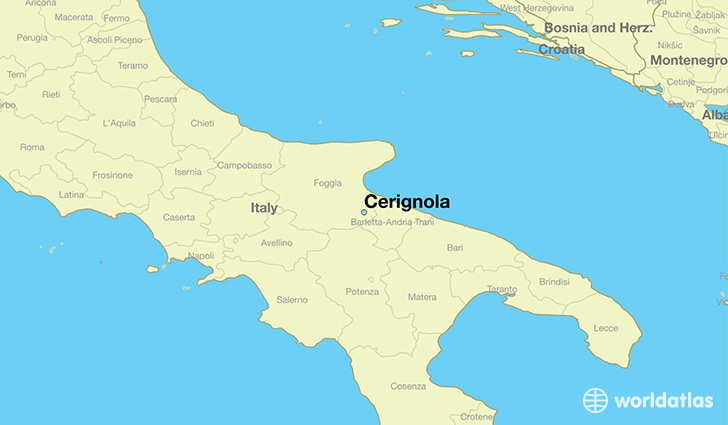
The Gran Capitán provoked the French into attacking him at Ceriñola, a town in the region of the Italian province of Foggia. Beforehand, he had ordered a moat dug, a wall erected on which sharp stakes were driven and artillery emplaced.
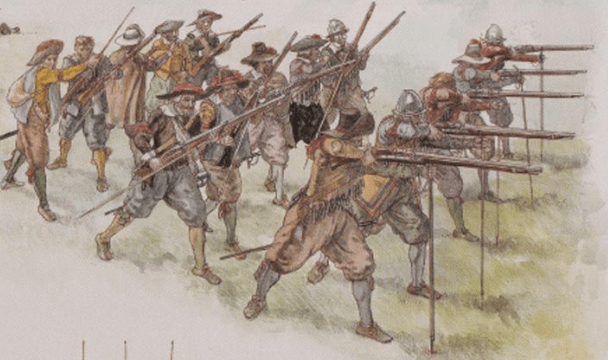
When the French Army arrived, the Spaniards were in a fortified position on an elevated enclave with the artillery and arquebusiers ideally placed to inflict maximum casualties on the French. The battle lasted only an hour.
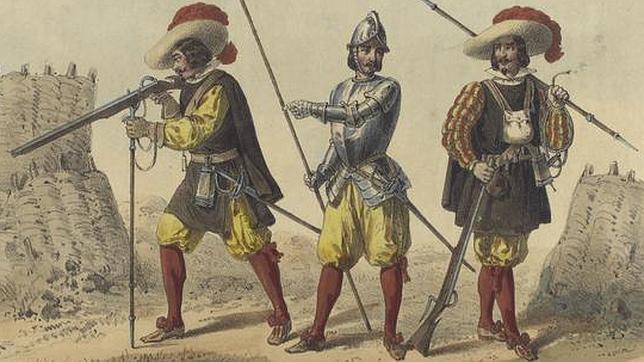
The French were caught by surprise by the pit with pikes and were unable to reach the Spanish front line. At this point the Spanish arquebusiers fired 4,000 shots, even killing Louis d’Armagnac, general of the French Army.
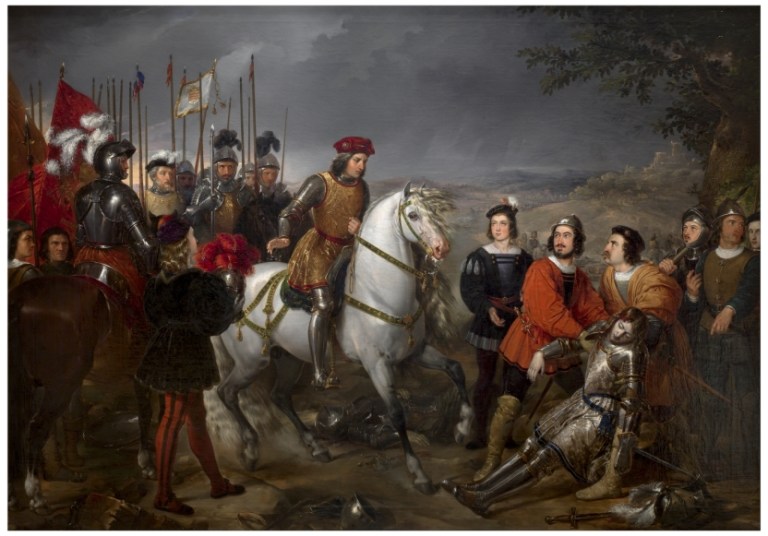
The French who reached the front line were repulsed by the pikemen. Finally, the Spanish cavalry surrounded the French and forced them to surrender. This painting by Federico de Madrazo shows the Gran Capitán contemplating the corpse of the French general.
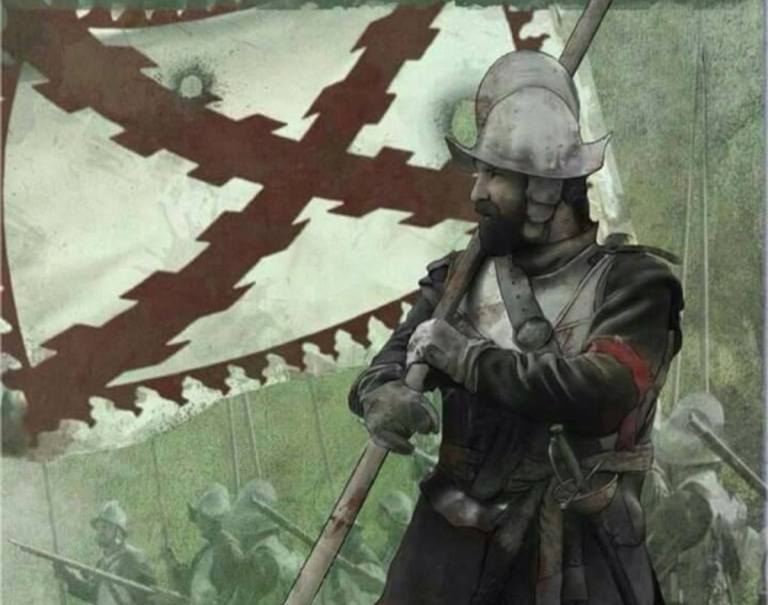
Thanks to the Gran Capitán, the Spanish Tercios were born, an army that would hold hegemony in Europe for at least a century and a half. Their tactics were based on fortification, choice of terrain, arquebusiers, rodeliers, and pikemen.
Share this article
On this day
- 1690 The excellent Baroque painter Juan de Valdés Leal, nemesis of Murillo and famous for his "Vanitas" in the Hospital de la Caridad, dies in Sevilla.
- 1940 At dawn, Lluís Company y Jover, President of the Generalitat de Catalunya, is shot by a picket of soldiers at Montjuic Castle for the crime of military rebellion.
History of Spain