
Source:dariomadrid.es
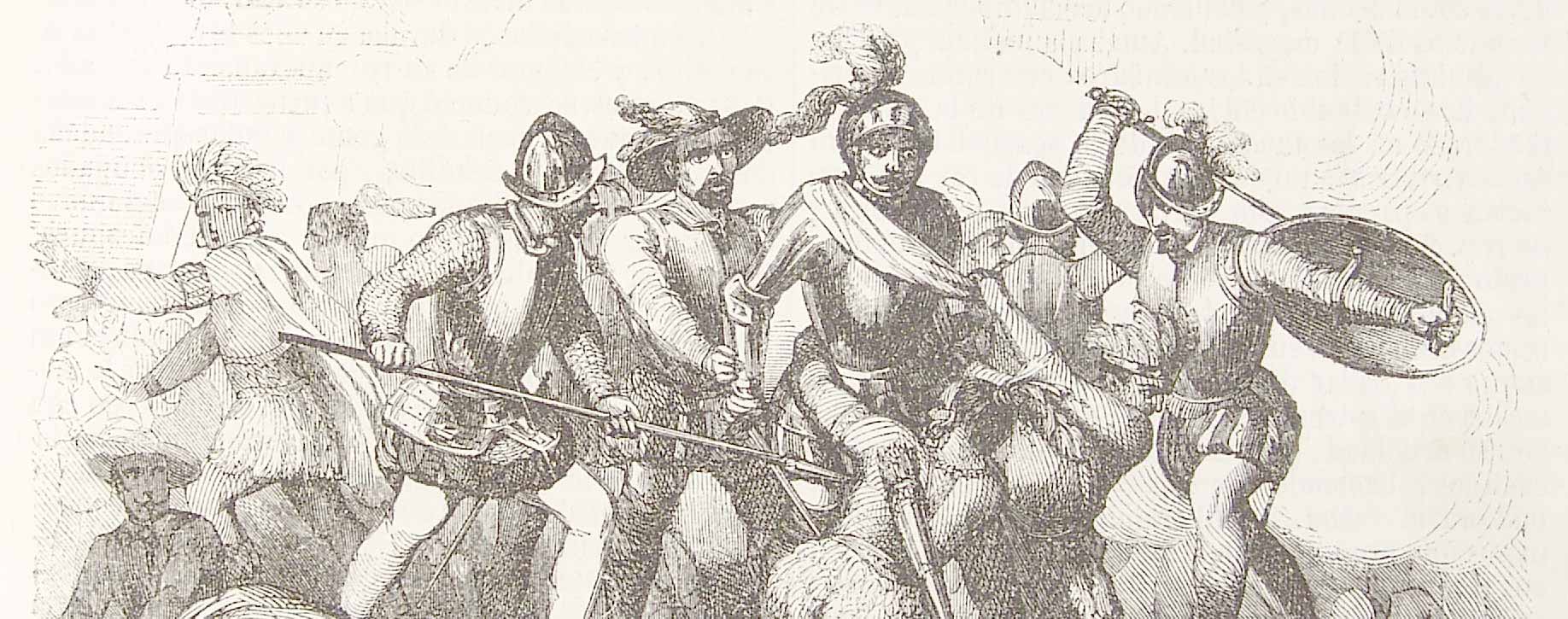
Did you know that the Spanish word “bicoca” comes from a battle in which the army of Carlos I of Spain and V of Germany defeated the French and Venetians on 27 April 1522? According to the RAE (Royal Academy of Spanish Language) , “bicoca” is something good achieved without effort. The imperial victory at Bicocca was quick and effortless.
At Bicocca, now a university district of Milan, the army of César Carlos won a crushing victory, driving France out of the Duchy of Milan. The key to the victory was the haste of Swiss mercenaries enlisted with the French and the great Imperial tactics.
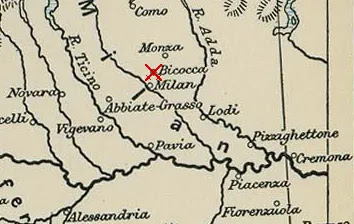 The Swiss mercenaries, annoyed at not having been paid, forced the French commander Odet de Lautrec to attack head-on the fortified position where the Imperial Army was located. They wanted to end the battle quickly to sack Milan and collect their pay.
The Imperial Army, commanded by Prospero Colonna, was waiting for them with artillery protected behind a wall built for the battle. Behind the wall were also four lines of Spanish arquebusiers led by the Navarrese Fernando de Avalos.
To reach the imperial positions, the Swiss had to climb an embankment. The Swiss were first hit by the Imperial artillery, which caused around 1,000 casualties. When the artillery ceased, the Spanish arquebusiers were on the Swiss pikemen.
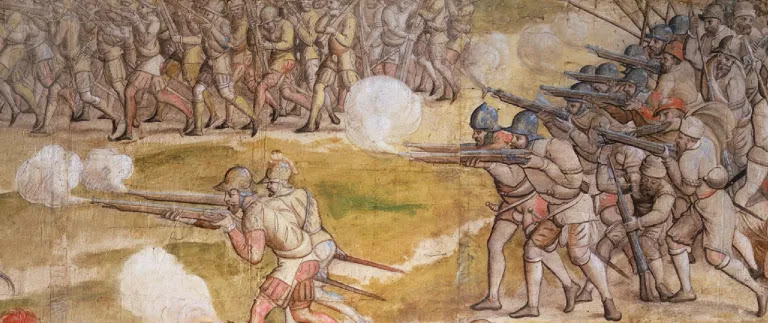
The Swiss who reached the top of the rampart were repelled by German lansquenets. The Swiss were forced to retreat after suffering 4,000 casualties. It is said that the Imperial Army suffered only one death, caused by a donkey’s kick. The battle of Pavia was looming.
Share this article
On this day
- 1177 Reconquista: Alfonso VIII and Alfonso II surrender Cuenca after nine months of siege.
- 1292 Reconquista: Sancho IV conquers Tarifa after an economically exhausting campaign.
- 1526 Spanish pilot Bartolomé Ruiz landed at and gave name to San Mateo de las Esmeraldas Bay in Ecuador.
- 1551 The Royal University of México was founded, the first in North America, created by a Royal Decree of Emperor Carlos V and signed in his name by prince Felipe in Toro, Zamora.
- 1558 Carlos V dies in Yuste.
- 1794 Malaspina's expedition returns.
- 1832 British writer Walter Scott dies.
- 1895 Juan de la Cierva y Codorníu (d. 1936) is born in Murcia.
History of Spain